
Contents of this guide
The shortlist
Our top 3 for sales buyers

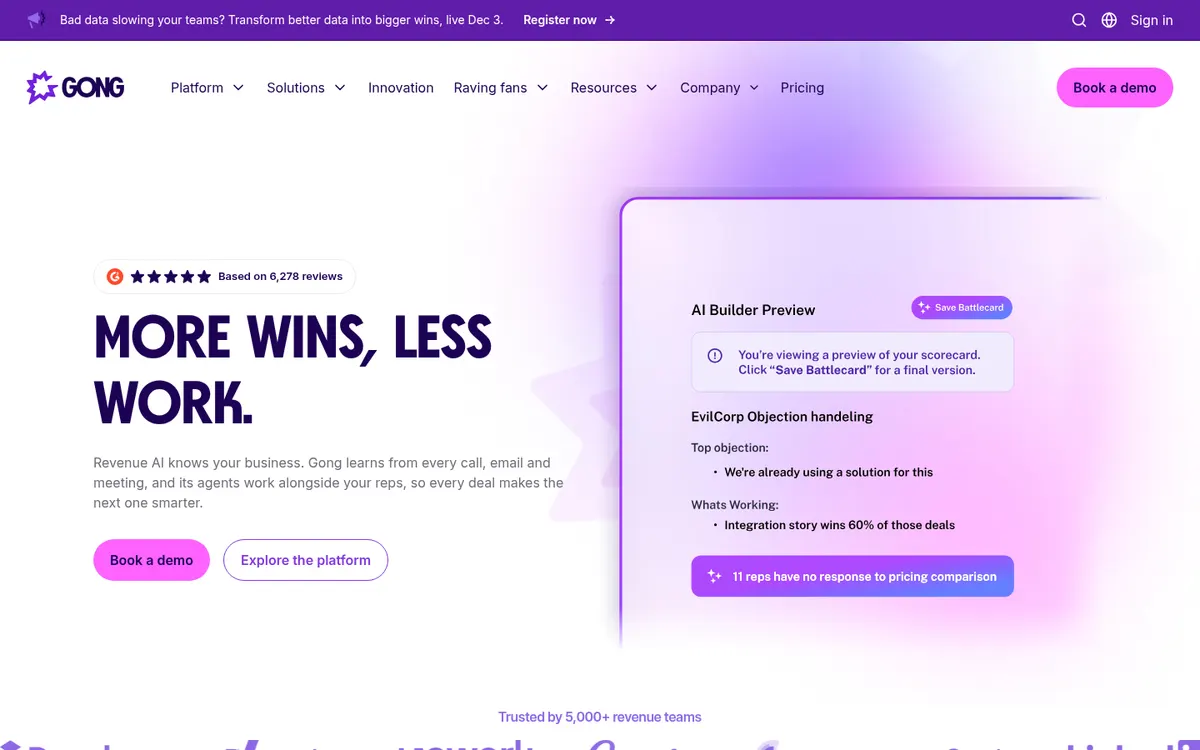
Gong
Conversation-based forecast signal
- Best for
- Revenue teams wanting call-based deal intelligence
- Features
- 4 noted: Call recording, Deal risk, Forecast views, CRM sync

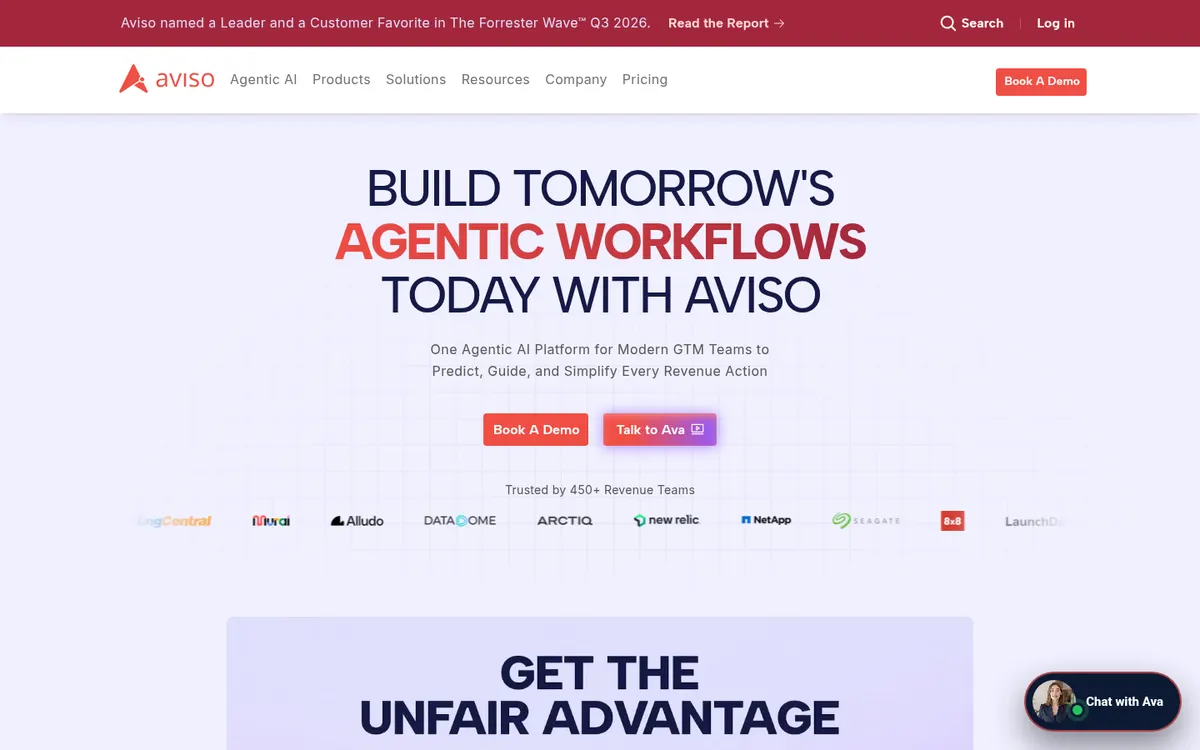
Aviso
Multi-entity forecasting depth
- Best for
- Enterprises wanting AI-guided forecasting
- Features
- 4 noted: Win scores, Next best action, Multi-currency, Dynamics connector

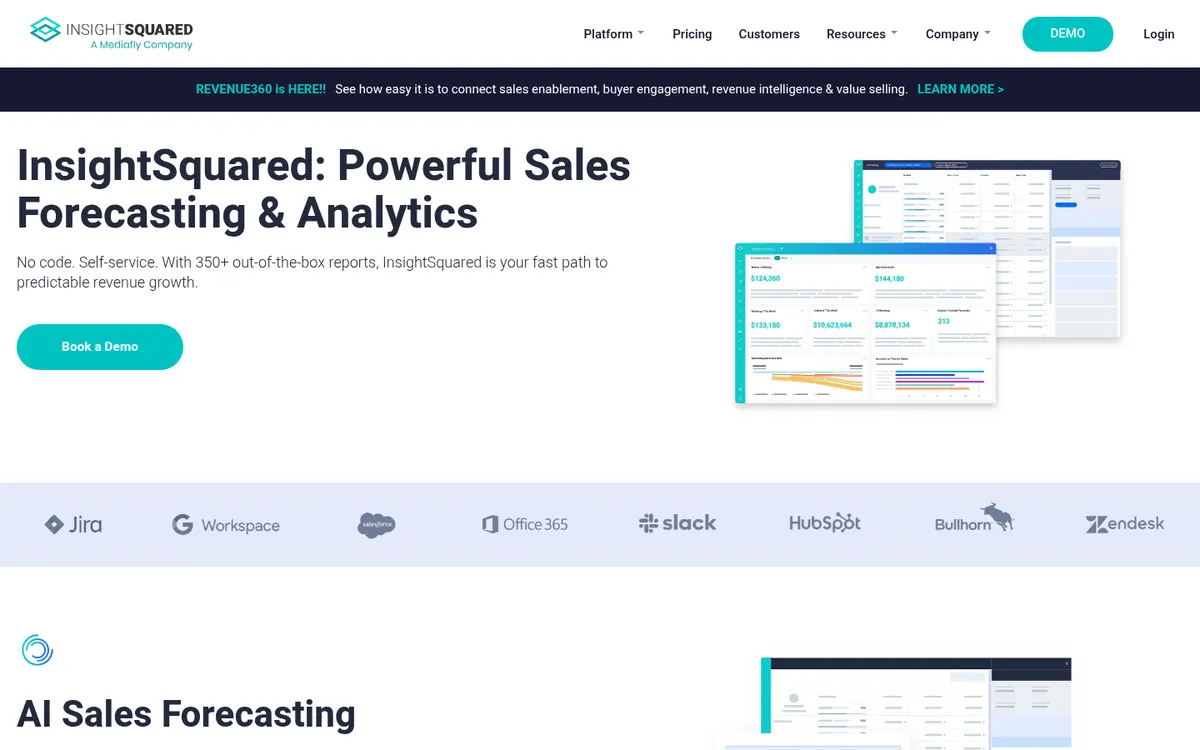
InsightSquared
Prebuilt Salesforce reports
- Best for
- Salesforce shops wanting prebuilt analytics
- Features
- 4 noted: Prebuilt dashboards, Accuracy tracking, Salesforce native, Activity capture
Disclosure for this guide. All 9 tools here are unpaid editorial picks. The position of a paid listing can be part of what the vendor pays for. Paid and unpaid tools are scored on the same rubric and keep their cons. Details are in the advertising disclosure.
The ledger
Index of every tool
| Tool | Free plan | Trial | Rubric | Compare | ||
|---|---|---|---|---|---|---|
| 01 | GongRevenue teams wanting call-based deal intelligence | See websiteNot published | No | No | ||
| 02 | AvisoEnterprises wanting AI-guided forecasting | See websiteNot published | No | No | ||
| 03 | InsightSquaredSalesforce shops wanting prebuilt analytics | See websiteNot published | No | No | ||
| 04 |  AnaplanFinance-led connected planning at scale | See websiteNot published | No | No | ||
| 05 |  PigmentModern alternative to legacy planning tools | See websiteNot published | No | No | ||
| 06 |  WeflowSalesforce teams wanting published pricing | $19Activity & Contact Capture, per user per month, billed annuallyChecked Nov 25, 2026 | Free tier: 25 agent actions/mo | No | ||
| 07 |  BackstoryLeaders wanting answers from activity data | See websiteNot published | No | No | ||
| 08 |  ForecastioSMBs wanting simple AI forecasting | $249Sales forecasting, per month, billed annually, includes 2 seatsChecked Nov 25, 2026 | No | One-month free pilot | ||
| 09 |  EbstaSalesforce teams wanting forecast accuracy guarantees | See websiteNot published | No | No |
Prices are the lowest paid plan the vendor shows, read on November 25, 2026. Sort by price ranks published monthly figures; tools without one go last. Pin up to three tools to compare them side by side.
How this guide was put together
Nine tools were scored on five criteria: forecast depth (25 percent), meaning the prediction and review workflow itself; data capture (20 percent), meaning how much reliable deal data the tool generates rather than assumes; pricing clarity (20 percent), meaning whether a buyer sees a number before a sales call; time to value (20 percent), meaning how long implementation takes; and ecosystem fit (15 percent), meaning how well it matches the CRM most buyers run.
Pricing was taken from vendor pricing pages checked on November 25, 2026. Two vendors publish a starting rate and both are recorded exactly as listed, with the plan note attached: $19 per user per month for Weflow on annual billing, and $249 per month for Forecastio on annual billing with two seats included. Where no pricing page was available, the tool is marked See website and no estimate was substituted.
Scores are relative to this set. A 9 for pricing clarity means a buyer can find a number, not that the product is cheap. A low score for time to value reflects months-long implementations, not product quality.
Featured placements are paid positions. Any entry marked Featured is scored with the same five criteria as the rest, carries the same honest cons list, and the label affects its position in the order rather than its scores.
The order is editorial. It reflects fit for the buyer each entry describes, plus any Featured position, and it is not a weighted total of the scores.
The full process, including how we handle corrections, is on the methodology page. Paid listings follow the advertising disclosure.
Rubric and weights
Every tool below is scored from 1 to 10 on these five criteria. The scores describe each tool; the order is an editorial call on fit for the buyer each card describes, plus the disclosed Featured position.
- 25%Forecast depthHow much real prediction, scoring and review workflow the tool provides beyond a pipeline report.
- 20%Data captureHow much reliable deal data the product generates or ingests without depending on rep data entry.
- 20%Pricing clarityWhether a buyer can see a real number before starting a sales cycle.
- 20%Time to valueHow long a typical implementation takes before the team can run a forecast on it.
- 15%Ecosystem fitHow well the tool matches the CRM and collaboration stack most buyers already run.
Plate 01 of 09
Gong
Best for revenue teams wanting call-based deal intelligence
Our verdict
Strong forecast signal for teams whose CRM data is thin, provided you can absorb an enterprise contract and a multi-week rollout.
Gong is a revenue intelligence platform that treats recorded customer conversations as the raw material for forecasting. Calls, emails and meetings are captured automatically, then analyzed for who joined, what was discussed and whether the buyer side engaged the way closed deals usually do. Managers get deal risk warnings and pipeline health views to run forecast calls from, rather than asking reps to restate confidence in a CRM field.
Two features matter for forecast accuracy specifically. Economic buyer attendance tracks whether the person who signs has actually been in the room, which is a strong early warning for deals that will slip. Conversation analytics show participation patterns across a deal, so a forecast review can be grounded in evidence instead of optimism.
Pricing is not published. That means an enterprise sales cycle, a scoped contract and a conversation about pipeline volume before a buyer sees a number. The platform is built for organizations running substantial deal flow, and implementation takes weeks rather than days, which is realistic for a system that has to connect to call infrastructure, email, calendar and CRM.
The fit is narrow but deep. If your forecast problem is that CRM data is thin or unreliable because reps update it badly, Gong attacks the cause instead of the symptom. If your pipeline data is already clean and your forecast misses for other reasons, you may pay enterprise-level cost for signal you cannot yet act on. Either way, expect to justify the spend against a measurable accuracy improvement, and plan for a scoped contract with no published rate to budget against.
What works
- Forecast input built from recorded interactions rather than rep opinion
- Economic buyer tracking flags deals likely to slip
- Deep native Salesforce and HubSpot integrations
What to weigh
- No published pricing, so buyers face a full enterprise sales cycle
- Implementation runs weeks, not days
- Scoped and priced for high pipeline volume
Pick it if
Your forecast misses because the CRM record is incomplete and you can fund an enterprise rollout.
Skip it if
Your pipeline data is already reliable or your team is too small to act on engagement signal.
Plate 02 of 09
Aviso
Best for enterprises wanting AI-guided forecasting
Our verdict
A serious enterprise forecasting model for multi-region teams, with quote-based pricing and onboarding that will overwhelm small sales organizations.
Aviso is an AI forecasting platform aimed at enterprises with long, multi-stage sales cycles. It scores each open opportunity with a predictive win probability, generates next-best-action guidance from patterns in previously closed deals, and rolls the result into forecast views that span regions, currencies and business units.
The guidance is the part that distinguishes it. Rather than stopping at a dashboard for managers, Aviso pushes prompts to reps inside their existing workflow, so the model's read on a deal turns into a suggested action. Connectors cover Salesforce, Microsoft Dynamics, email and calendar, and multi-entity support means a European and a North American forecast can sit in one structure without a spreadsheet reconciliation exercise.
Pricing is entirely quote-based, and total cost typically includes implementation services. That combination is normal at this end of the market, but it makes comparison shopping hard: two buyers with similar seat counts can land on different numbers depending on scope, connectors and services. Heavy enterprise onboarding is the second practical constraint, and it is the reason small teams should look elsewhere.
Aviso is best evaluated when the forecast process genuinely spans multiple regions, currencies and business units, because that complexity is what the product is built to absorb. A team that wants a cleaner pipeline view and a weekly forecast call will find the model set, the onboarding and the contract weight excessive for the problem. Bring a defined scope and a named owner for the implementation before the first call.
What works
- Predictive win scores trained on large historical deal sets
- Handles multi-currency, multi-entity forecast structures
- Pairs prediction with rep-facing coaching prompts
What to weigh
- Quote-only pricing with services usually included in total cost
- Heavy onboarding that swamps small sales teams
- Feature set far exceeds a simple pipeline forecast
Pick it if
Your forecast spans several regions, currencies and business units in one process.
Skip it if
You have one sales region and want a cleaner pipeline view rather than a modeling project.
Plate 03 of 09
InsightSquared
Best for salesforce shops wanting prebuilt analytics
Our verdict
A fast route to Salesforce forecasting dashboards, and a poor fit the moment your CRM strategy moves away from Salesforce.
InsightSquared is a forecasting and sales analytics tool built directly on Salesforce data. It ships with a library of prebuilt reports and dashboards, which is where its speed comes from: instead of a months-long custom analytics project, a Salesforce admin can connect the org and get pipeline, activity and conversion reporting quickly.
The forecasting module covers accuracy tracking, historical trends layered over current pipeline, and the standard manager review workflow. Activity capture from email and calendar fills in some of the blanks reps leave, so reports depend less on manual logging. Because everything is purpose-built on Salesforce objects, setup is quicker than general planning platforms that need a model built from scratch.
The limits follow from that design. Value drops sharply outside Salesforce, so HubSpot and Dynamics environments are a poor fit and should not be on the shortlist at all. Pricing is not published and the product sits in the mid-market to enterprise price band, so buyers need a quote and a seat count before they can compare it to the two tools here that list a rate.
The sweet spot is a Salesforce-based team of roughly 20 to 200 sellers that wants forecasting plus activity and conversion analytics without commissioning a custom build. Below that size, the reporting library may be more than the team can use. Above it, larger organizations often want the planning depth that Anaplan or Pigment provide. Fit depends heavily on staying inside the Salesforce ecosystem for the foreseeable future.
What works
- Prebuilt Salesforce reports shorten time to first dashboard
- Combines forecasting with activity and conversion analytics
- Quicker setup than general planning platforms
What to weigh
- Little value in HubSpot or Dynamics environments
- Pricing not published and sits in a mid-market to enterprise band
- Reporting breadth can exceed what a small team will use
Pick it if
You run Salesforce with 20 to 200 sellers and want forecasting without a custom analytics build.
Skip it if
You run HubSpot or Dynamics, or expect to change CRM within a couple of years.
Plate 04 of 09
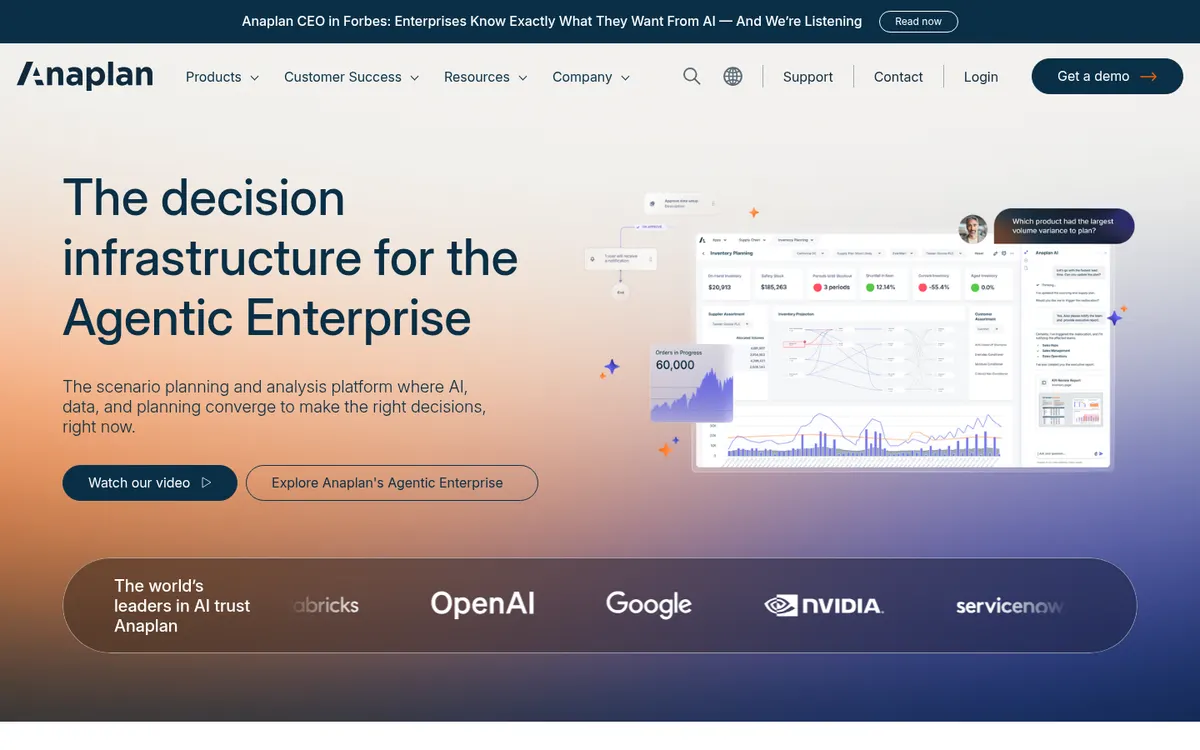
Anaplan
Best for finance-led connected planning at scale
Our verdict
Connected planning at genuine scale, where sales is one input, and months of implementation with specialist builders come with it.
Anaplan is a connected planning platform, not a dedicated sales forecasting tool. Sales forecasting is one use case among several, sitting alongside finance, operations and headcount planning in a single modeling environment where a change to one input flows through the rest of the plan.
For sales specifically, that means territory, quota and commission modeling handled natively, hiring plans linked to the revenue forecast, and downstream plan updates when forecast inputs change. Scenario modeling and what-if analysis let a planning team test a downside case without rebuilding the model. Deployments scale to very large, multi-business-unit organizations, which is where the platform has proven itself.
The cost of that capability is real. Implementations run for months and need specialist model builders, and the ongoing maintenance effort is a permanent line item rather than a one-off project cost. Pricing is quoted, so the number depends on modules, users and the implementation partner. For a straightforward pipeline forecast, this is overkill by a wide margin, and buyers should say so early in the evaluation.
Anaplan fits when the sales forecast has to connect to the wider operating plan and the organization already has, or will fund, the modeling expertise to maintain it. If your problem is a weekly forecast call where reps sandbag and managers guess, a lighter tool will solve it faster and cheaper. Treat sales forecasting as one requirement among many and evaluate the platform on connected planning rather than on forecast accuracy alone.
What works
- Links the sales forecast to the wider operating plan
- Native territory, quota and commission modeling
- Proven at very large organizational scale
What to weigh
- Implementations run for months and need specialist builders
- Significant cost plus ongoing maintenance effort
- Overkill for a straightforward pipeline forecast
Pick it if
The sales forecast must feed hiring, quota and finance plans in one connected model.
Skip it if
Sales forecasting is your only requirement or you cannot fund dedicated model builders.
Plate 05 of 09
Pigment
Best for modern alternative to legacy planning tools
Our verdict
A faster, friendlier planning platform for finance and sales, with a smaller partner ecosystem than the legacy suites it targets.
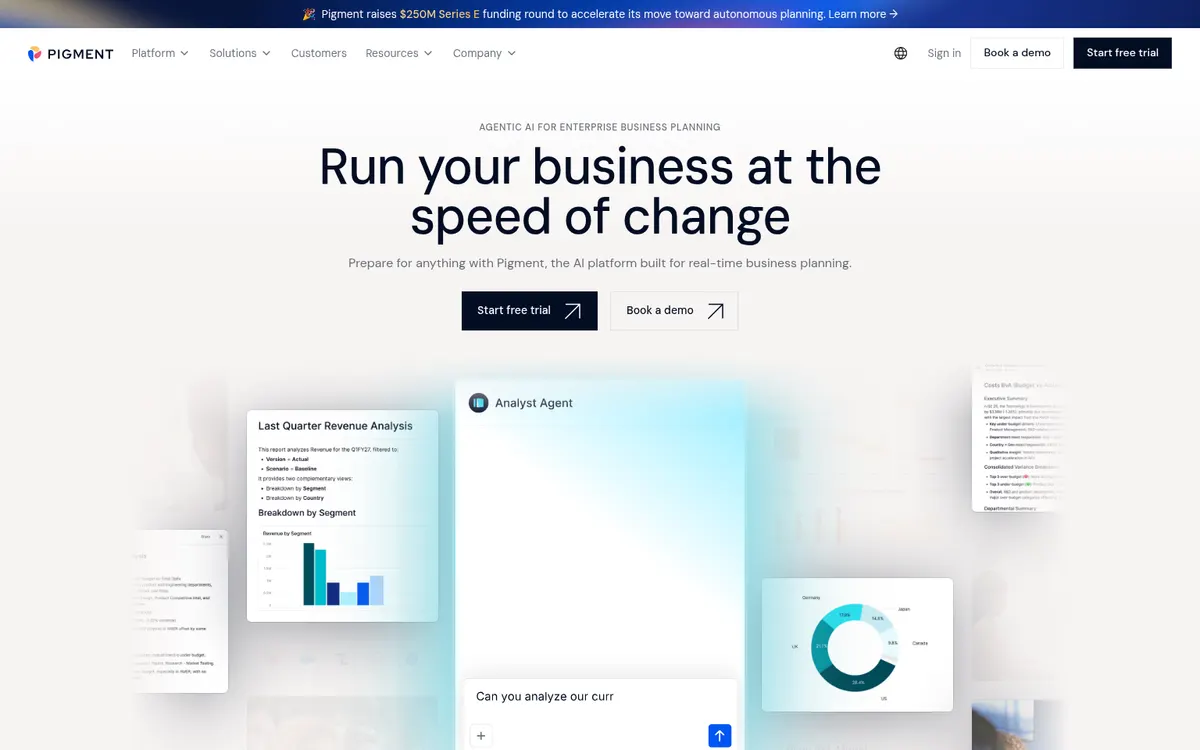
Pigment is a connected planning platform positioned as a modern alternative to legacy suites. It covers sales forecasting alongside workforce and financial planning, with a shared model so sales commitments and finance plans refer to the same numbers instead of two spreadsheets that disagree.
The interface is the differentiator. It is designed for finance and sales users rather than specialist model builders, which changes who can maintain the plan after implementation. Real-time collaboration means several stakeholders can work in the same model, and scenario and what-if modeling lets a team test forecast variations without a rebuild. Implementation is measured in weeks rather than quarters, a meaningful difference against longer planning rollouts.
The trade-offs are ecosystem and price. The partner and template ecosystem is smaller than established planning vendors offer, so unusual requirements may mean more custom work and fewer people who have solved the same problem before. Pricing is quote-based, so the published rates at the cheap end of this list are not a comparison point. Very complex global deployments may still favor incumbent platforms with deeper implementation networks.
Pigment fits growth-stage companies that have outgrown spreadsheets but do not want a multi-quarter legacy planning rollout, and that want finance and sales working in one model. If sales forecasting is the only requirement, a dedicated tool will be cheaper and faster. If the forecast has to sit beside hiring and spend plans in one place, the connected model is the reason to buy.
What works
- Interface built for finance and sales users, not specialists
- Implementation measured in weeks rather than quarters
- Strong scenario modeling for forecast variations
What to weigh
- Smaller partner and template ecosystem than legacy vendors
- Quote-based pricing with no published entry rate
- Complex global deployments may still favor incumbents
Pick it if
You have outgrown spreadsheets and want sales, hiring and spend plans in one shared model within weeks.
Skip it if
You only need pipeline forecasting or your deployment spans dozens of entities with bespoke requirements.
Plate 06 of 09
Weflow
Best for salesforce teams wanting published pricing
Our verdict
Publicly listed pricing, wrapped around a Salesforce-only tool whose advanced forecast controls cost extra.
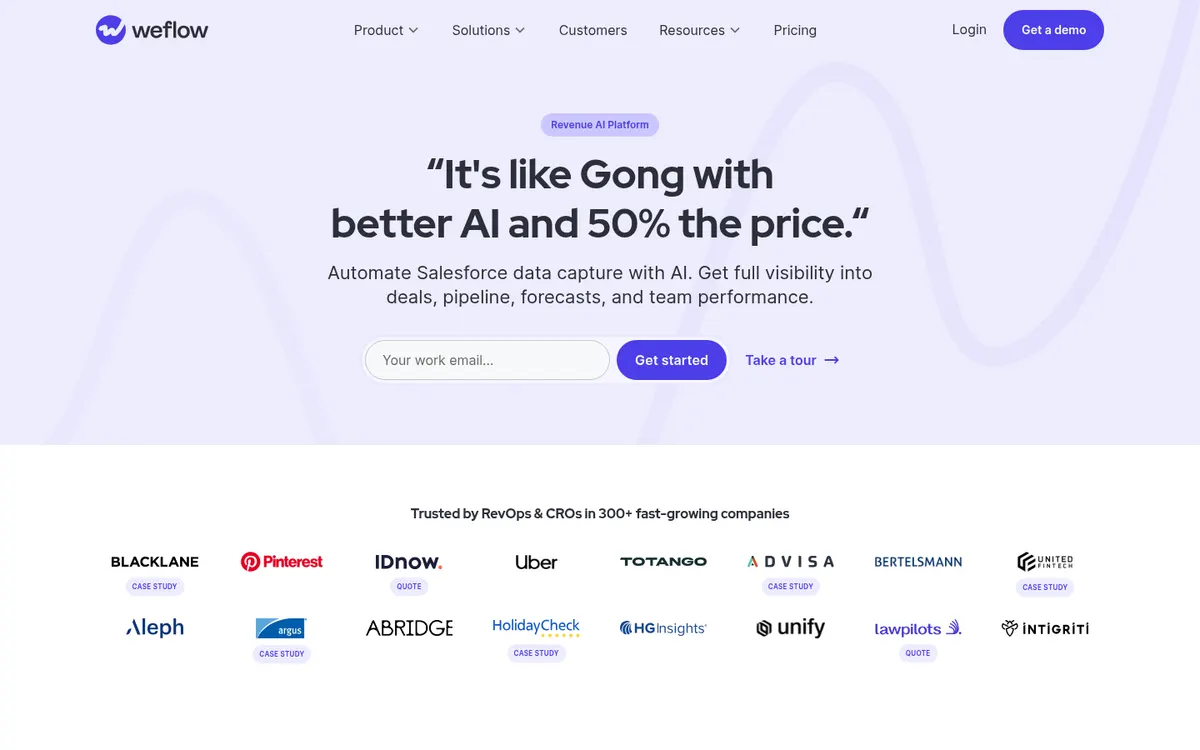
Weflow is a Salesforce-native pipeline and forecasting tool with publicly listed entry pricing, which makes it unusual in a category where most vendors hide the number behind a quote. The entry rate is $19 per user per month on the Activity & Contact Capture plan, billed annually, and there is a free tier covering 25 agent actions per month.
The product covers pipeline boards inside Salesforce, activity capture across sales interactions, AI summaries of deal activity, and forecasting workflows for weekly manager reviews. Higher tiers add forecast process controls and team coaching features, which is where the actual forecast governance lives. Because it works on Salesforce objects rather than a parallel data store, roll-out builds on the Salesforce org you already run.
Two constraints matter. It works only with Salesforce, so HubSpot and Dynamics teams should stop reading here. And per-user pricing scales quickly: a 50-seat deployment multiplies the entry rate across every seat, and the advanced process and coaching features sit in pricier tiers, so the entry number is a floor rather than a budget.
Weflow fits Salesforce teams that want to size the cost before a sales conversation and that need manager review workflow more than predictive scoring. It is one of the few options here with a published entry rate, which makes it easier to budget against a seat count. Teams wanting AI deal prediction should weigh it against the dedicated scoring tools on this list before committing to an annual term, because the entry tier captures activity rather than forecasting it.
What works
- Publicly listed entry pricing, rare in this category
- Free tier at 25 agent actions per month
- Native Salesforce pipeline boards and AI summaries
What to weigh
- Salesforce only, no HubSpot or Dynamics support
- Per-user pricing multiplies fast across larger teams
- Forecast process and coaching controls sit in higher tiers
Pick it if
You run Salesforce and want to see the per-seat cost before you take a sales call.
Skip it if
You are not on Salesforce or you need predictive deal scoring rather than review workflow.
Plate 07 of 09
Backstory
Best for leaders wanting answers from activity data
Our verdict
Forecast answers built from automatic activity capture, though a recent rebrand means buyers must check they are evaluating the current product.
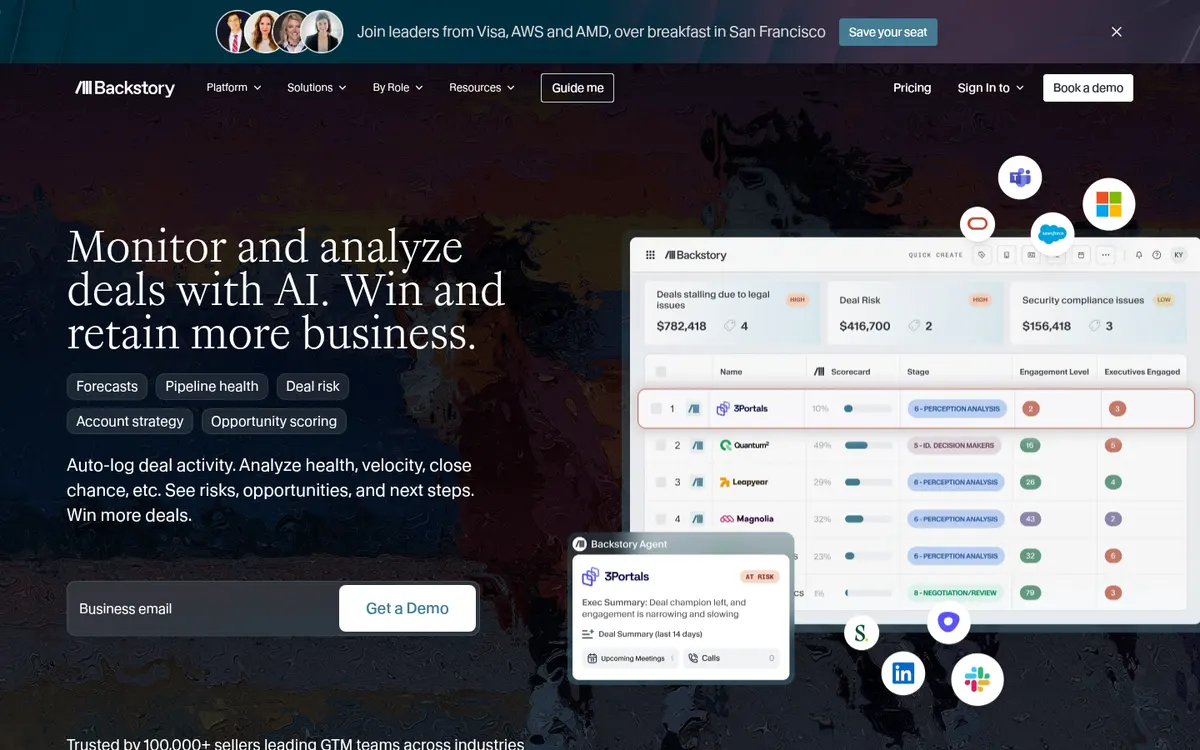
Backstory, formerly People.ai, captures emails, meetings and calls automatically and matches that activity to accounts and opportunities. The forecast views and waterfall charts are built on captured activity rather than rep-entered fields, with risk headlines generated from what actually happened on the deal and a complete account history that nobody had to log by hand.
The rebrand matters for evaluation. The pitch shifted from data infrastructure toward direct answers for revenue leaders, delivered inside the CRM and AI assistants, so older material describes a differently positioned product. Buyers should confirm they are looking at the current offering and the current packaging before comparing it to anything written more than a year ago.
Pricing is not published, and the product targets mid-market and enterprise revenue leaders rather than small teams. That combination means a quote, a scoping conversation and a procurement cycle. The value case rests on how much of your forecast discussion is currently guesswork because activity data is incomplete, which is a question you can answer internally before any vendor call.
Backstory fits organizations that want answers rather than dashboards: a leader asks why the quarter looks soft and gets a response grounded in meetings held, emails exchanged and stakeholders engaged. It is a weaker fit for teams that already capture activity well, or that need planning and quota modeling, where Anaplan or Pigment are the relevant comparison.
What works
- Forecast inputs come from captured activity, not typed fields
- Answers delivered inside the CRM and AI assistants
- Broad automatic capture across email, meetings and calls
What to weigh
- Rebrand means older material describes a different product
- No public pricing and a mid-market to enterprise target
- Weak fit for teams that already capture activity well
Pick it if
Revenue leaders want risk answers grounded in activity rather than another dashboard to read.
Skip it if
You are a small team, or if you need quota and territory modeling rather than activity-derived answers.
Plate 08 of 09
Forecastio
Best for SMBs wanting simple AI forecasting
Our verdict
A clear, affordable entry point for small teams that want scored deals and a review workflow, if the scoring holds up in a pilot.
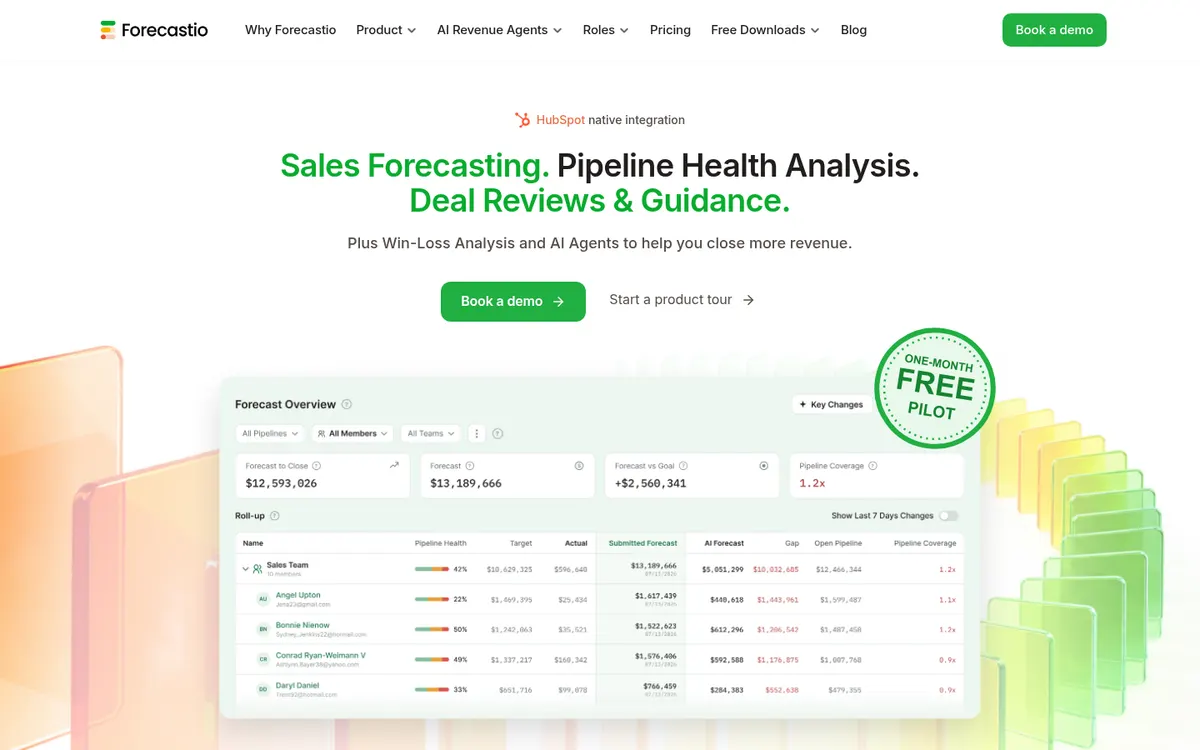
Forecastio is a small-team forecasting tool with published self-serve pricing. The listed rate is $249 per month on annual billing, covering two seats, with additional seats at $49 per month. There is no free plan, but the vendor offers a one-month free pilot, which is the only trial on this list.
The feature set is deliberately narrow: AI deal scoring, risk identification across the pipeline, a single-view forecast review workflow for managers, and deal-level guidance during forecast reviews. It is designed for small sales teams that want a scored pipeline and a structured weekly review without a platform implementation or a data team.
Two things deserve scrutiny before signing. First, the monthly floor is high for a very small team: a three-person sales organization pays the base rate for two seats plus $49 for the third, which is a real per-head cost. Second, the product is young and the scoring methodology needs testing against your own closed deals rather than a vendor demo. Ask how the AI scores are computed, what data they train on and how often they have proven accurate.
Forecastio fits small sales teams that want transparent pricing, quick deployment and a manager review workflow in one place. It does not fit teams needing connected planning across finance and operations. Weigh the monthly floor against how many people will actually log in, since the base fee covers two seats regardless. The pilot is the right way in: run it against a quarter you already closed and compare the scores with what happened.
What works
- Published self-serve pricing a small team can evaluate immediately
- One-month free pilot is the only trial on this list
- Deal scoring and risk flagging in a single view
What to weigh
- Monthly floor is high for very small teams
- Young product with a scoring method worth testing
- Base fee covers two seats regardless of team size
Pick it if
You have a small sales team and want a scored pipeline and weekly review workflow without a platform project.
Skip it if
You are a very small team, or you need planning depth beyond pipeline review.
Plate 09 of 09
Ebsta
Best for salesforce teams wanting forecast accuracy guarantees
Our verdict
Forecast discipline backed by a public accuracy commitment, which is worth exactly as much as the conditions attached to it.
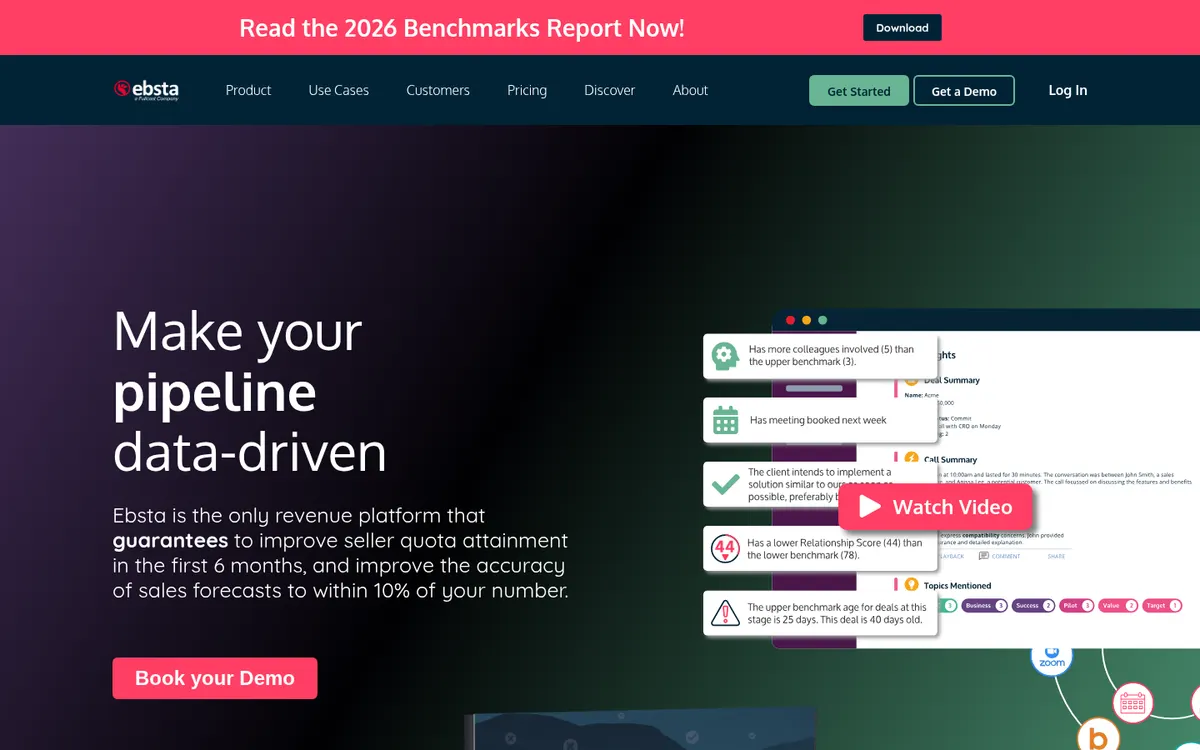
Ebsta learns from every interaction and closed deal, then applies those patterns to seller guidance, pipeline reviews and forecast call preparation. Salesforce is the system of record, Slack alerts arrive in the flow of work, and the vendor describes a fast implementation cycle, which it puts at 30 days.
The headline is a public forecast accuracy commitment: the vendor states it will bring your forecast within 10 percent of the number within six months, alongside quota attainment improvement and that 30-day implementation. That is unusual, and it is the main reason to look closely at Ebsta during evaluation. It is also conditional, and the conditions sit in commercial terms rather than marketing copy, so read them before treating the promise as insurance.
Pricing is not published, and commercial terms determine whether the guarantee applies at your deal size. That makes the evaluation sequence important: establish the quote and the terms first, then test whether the accuracy commitment actually attaches to your contract. A guarantee that only applies above a certain contract value is a different proposition from one that applies universally.
Ebsta fits Salesforce teams that want pipeline review discipline and a vendor willing to put an accuracy number in writing. Pattern learning from won and lost deals is the mechanism, so the tool is only as good as the history in the CRM and the consistency of your stage definitions. Teams on HubSpot or Dynamics, or those wanting planning and quota modeling, should look at other entries on this list.
What works
- Public forecast accuracy commitment within a defined timeframe
- Pattern learning from won and lost deals informs reviews
- Native Salesforce and Slack integration
What to weigh
- Accuracy guarantee carries conditions that need reading
- No published pricing, and terms decide if guarantees apply
- Depends on consistent CRM history and stage definitions
Pick it if
You run Salesforce and want a vendor willing to attach an accuracy number to your contract.
Skip it if
You cannot satisfy the guarantee conditions or you are not on Salesforce.
What Actually Counts as Sales Forecasting Software?
Sales forecasting software predicts what a sales team will close in a given period, then tracks how close those predictions landed. The category is broad because the prediction can be built from four different sources, and most tools specialize in one or two of them rather than all four.
The first layer is the CRM, which holds opportunities, stages and close dates. Almost everything here reads from it. The second is activity capture: recorded calls, emails and meetings that show whether a deal is actually moving. The third is a prediction layer that scores deals and flags risk. The fourth is a planning model that connects the sales number to hiring, quota and finance. Where a tool sits among these layers determines what it is good at.
That is why the phrase covers so much ground. Conversation analytics platforms such as Gong, and activity capture tools such as Backstory, sell forecasting as an outcome of better data. Aviso and Ebsta sell scoring and risk. Anaplan and Pigment sell connected plans in which sales is one input among several.
Three distinctions help buyers:
- Revenue intelligence records and analyzes customer interactions; forecasting is one report on top of that data.
- Activity capture fills the gaps reps leave in the CRM; it does not decide whether a deal will close.
- Connected planning platforms model the business; a sales forecast is one worksheet inside them.
The common thread is the system of record. None of the nine tools replaces the CRM. They read from Salesforce, Microsoft Dynamics or HubSpot, then add signal, scoring or planning on top. A forecast tool is only as good as the pipeline data going in, which is why vendors in this category spend so much effort on capture and data hygiene rather than on the chart itself.
This guide sits in the Sales collection. Buyers weighing nearby tools often read the guides to email finder tools for sales teams and CRM software for commercial real estate next.
How Sales Forecasting Software Pricing Works, From Listed Rates to Quoted Contracts
Seven of the nine tools on this list publish no pricing at all. Two do: Weflow lists $19 per user per month on the Activity & Contact Capture plan, billed annually, and Forecastio lists $249 per month billed annually with two seats included and additional seats at $49 per month. Everything else is a quote, which means seat count, modules and implementation services decide the number.
The practical consequence is that published entry rates are a floor, not a budget. Weflow's forecasting process controls and coaching features sit in higher tiers, so a team that needs those pays more than $19. Forecastio's base fee covers two seats, so a ten-person sales team adds eight seats at the listed per-seat rate. Neither number is misleading, but neither is the whole contract.
| Model | How it bills | Typical fit | Example from this list |
|---|---|---|---|
| Published per-seat | Per user, per month, billed annually | Teams that want to size cost before a sales call | Weflow, $19 per user per month on Activity & Contact Capture |
| Published per-account | Flat monthly rate, billed annually, two seats included | Small teams wanting a fixed number | Forecastio, $249 per month, additional seats $49 per month |
| Quote-based subscription | Annual contract scoped to seats and modules | Mid-market and enterprise sales teams | Gong, InsightSquared, Backstory, Ebsta, Pigment |
| Quote plus services | Subscription plus an implementation engagement | Multi-region or multi-entity deployments | Aviso, where total cost typically includes implementation services; Anaplan, which needs specialist model builders |
Ask two questions in every quote conversation. What is included at the base rate, and what changes the number at renewal. Seats are the obvious variable, but connectors, modules, activity volume and services are the ones that move a contract most.
Every price in this guide was read on the vendor's own pricing page on November 25, 2026. Where a vendor does not publish a figure we could confirm, the card says "See website" rather than a guess. For the arithmetic around this purchase, try the free Email pattern generator.
How to Get From Nine Tools to One: A Buying Path
Name the failure. Write down what actually goes wrong today: late deals, sandbagged commits, no visibility, or a plan that ignores hiring. That answer decides whether you need capture, scoring, reporting or connected planning.
Check the system of record. Confirm which CRM is genuinely the source of truth for opportunities. Salesforce shops can consider all nine tools; HubSpot and Dynamics buyers can rule out InsightSquared, Weflow and Ebsta immediately.
Separate capture from prediction. Decide whether your real problem is missing deal data or a weak read on the data you already have. Capture tools fix the first, scoring tools fix the second, and buying the wrong one wastes a year.
Pick a budget model. Choose between a published rate you can size today (Weflow, Forecastio) and a quote-based enterprise contract. Be honest about whether procurement can run a multi-month cycle and whether services budget exists.
Test against closed history. Take last quarter's deals through the tool's scoring or classification and compare with outcomes. A demo shows the interface; your own closed deals show whether the model reads your business.
Pilot before a long term. Use the one-month Forecastio pilot where it fits, then commit short. Forecast ownership, pricing and packaging change, so keep the first term short enough to change your mind.
Five Buying Mistakes That Sink Forecasting Projects
Buying capture when you need planning. Activity capture and conversation analytics improve deal data, but they will not connect the sales forecast to hiring, quota or finance. Match the tool to the failure you named.
Treating a published rate as the total. A per-seat entry rate excludes the higher tiers where forecast process and coaching live, and a per-account base fee excludes extra seats. Budget the tier you actually need.
Skipping the data quality question. No model rescues stale close dates and skipped stages. Before buying, check how many open opportunities have moved stage in the last 30 days.
Letting a guarantee replace diligence. A public accuracy commitment is worth reading, not assuming. Confirm whether the conditions attach at your contract value and what happens if the target is missed.
Signing a long term before a pilot. A quarter of your own closed deals tells you more than any demo. Keep the first term short and check data export and migration terms before signing.
Best Sales Forecasting Software 2026: questions
What does sales forecasting software actually cost?
Two tools here publish a rate and seven do not. Weflow lists $19 per user per month on annual billing, and Forecastio lists $249 per month on annual billing with two seats, additional seats at $49 per month. Everything else is quote-based, so cost depends on seat count, modules and implementation services, and two buyers with similar headcounts can receive very different numbers.
How is forecasting software different from revenue intelligence?
Revenue intelligence records and analyzes customer conversations; forecasting predicts the number. Gong and Backstory build forecast input from captured calls, emails and meetings, so the forecast reflects buyer behavior rather than rep opinion. A dedicated forecasting tool such as Forecastio or InsightSquared starts from CRM fields and adds scoring or reporting. The two categories often overlap in practice.
Do small teams need dedicated forecasting software?
Not always. A small team with a well-maintained CRM often gets more from forecast discipline, consistent stage definitions and a strict weekly review than from a new tool. Dedicated software starts to pay when the pipeline is too large for a manager to read every deal.
How is forecast accuracy claimed, and what does data quality do to it?
Accuracy is the gap between the number you called and the number you closed, measured over several quarters. Data quality sets the ceiling: if reps leave close dates stale or skip stages, no model corrects it. That is why capture-heavy tools such as Gong and Backstory lead with data collection, and why Ebsta's 10 percent commitment carries conditions worth reading.
Does a forecasting tool replace the CRM?
No. Every tool on this list reads from Salesforce, Microsoft Dynamics or HubSpot, or integrates with them, and none is designed to be the system of record. The CRM holds opportunities, stages and close dates. Forecasting software adds capture, scoring or planning on top. Replacing the CRM with a forecasting tool would leave you without the underlying deal data.
Does vendor consolidation in sales software change how I should buy?
It makes contract terms more important. When products change ownership, pricing and packaging can move inside your contract term. Ask about data export formats, termination rights and migration assistance, and prefer terms that let you leave without losing history. A short first term and a pilot, such as the one-month Forecastio pilot, reduce the risk of a product being repriced under you.