
Contents of this guide
The shortlist
Our top 3 for marketing buyers

SimpleTexting
Credit rollover
- Best for
- Small businesses running simple, high-volume text campaigns
- Features
- 5 noted: Mass texting, Drip automation, MMS, AI generator, API access

Textedly
No feature gating
- Best for
- Buyers who want every feature on every tier
- Features
- 5 noted: Text to pay, Review requests, AI agents, Free numbers, Unlimited contacts

EZ Texting
Fast 10DLC setup
- Best for
- Businesses that need to launch texting quickly
- Features
- 4 noted: 10DLC included, AI compose, Drip campaigns, Text to pay
Disclosure for this guide. All 9 tools here are unpaid editorial picks. The position of a paid listing can be part of what the vendor pays for. Paid and unpaid tools are scored on the same rubric and keep their cons. Details are in the advertising disclosure.
The ledger
Index of every tool
| Tool | Free plan | Trial | Rubric | Compare | ||
|---|---|---|---|---|---|---|
| 01 | SimpleTextingSmall businesses running simple, high-volume text campaigns | $39Annual billing, 500 credits per month, $4 one-time carrier registrationChecked Nov 25, 2026 | No | Free trial, no credit card required | ||
| 02 | TextedlyBuyers who want every feature on every tier | $29Basic plan, billed monthly, 500 messages per monthChecked Nov 25, 2026 | No | Free account with 50 messages and one keyword, no credit card | ||
| 03 | EZ TextingBusinesses that need to launch texting quickly | $20Launch plan, per month, billed annually, 500 contacts, 1 user includedChecked Nov 25, 2026 | No | 14-day free trial | ||
| 04 |  SlickTextBrands wanting full features with no tier restrictions | $29500 credits per month, annual billing gives 2 months freeChecked Nov 25, 2026 | No | Free trial, no credit card required | ||
| 05 |  SakariTeams texting across borders or needing deep integrations | $25Standard plan, per month, 823 segments, one free number includedChecked Nov 25, 2026 | No | 14-day free trial with 100 messaging credits | ||
| 06 |  SalesmsgSales teams needing two-way texting plus calling | See websiteNot published | No | 14-day free trial | ||
| 07 |  PostscriptShopify stores treating SMS as a core channel | FreeStarter tier, $0 per month with $49 monthly minimum spendChecked Nov 25, 2026 | Yes, Starter tier $0/mo with $49 monthly minimum spend | Free trial with $100 credit for first 30 days | ||
| 08 |  KlaviyoStores wanting email and SMS in one platform | $20Email plan, 500 active profiles, 5,000 emails per monthChecked Nov 25, 2026 | Yes, up to 250 active profiles and 500 emails per month | No | ||
| 09 |  AttentiveEnterprise brands wanting a managed SMS program | See websiteQuote-based with annual commitmentsNot published | No | No |
Prices are the lowest paid plan the vendor shows, read on November 25, 2026. Sort by price ranks published monthly figures; tools without one go last. Pin up to three tools to compare them side by side.
How this guide was put together
We scored nine platforms against the same five criteria, weighted for what actually changes a buying decision. Message value carries 25 percent: how much sending capacity and feature access a plan delivers for the money. Ease of launch, automation depth, channel reach and cost clarity split the rest at 20, 20, 20 and 15 percent. Cost clarity rewards vendors who publish real rates rather than hiding behind a quote, which is why a free-to-install tool with open per-message pricing scores well despite a monthly minimum.
Every price here comes from the vendor's own pricing sheet, checked on November 25, 2026. Where a page would not load or the vendor publishes nothing, the entry reads See website and the review says so rather than estimating. Starting prices keep the form the vendor used, so you will see $39 and $29 rather than converted or rounded figures. Plan qualifiers such as billing term, credit allowance and seat counts come from the same pages.
We also read the fine print outside the headline number: carrier pass-through fees, flat telecom charges, extra seat costs, MMS credit multipliers and registration charges. Those items decide more outcomes than the plan price does.
The order reflects how well each tool fits the buyer described in its entry, not a calculated total. When an entry is marked Featured it is a paid placement, and it is scored with the same rubric and carries the same kind of cons as everything else. No vendor saw this list before publication.
The full process, including how we handle corrections, is on the methodology page. Paid listings follow the advertising disclosure.
Rubric and weights
Every tool below is scored from 1 to 10 on these five criteria. The scores describe each tool; the order is an editorial call on fit for the buyer each card describes, plus the disclosed Featured position.
- 25%Message valueHow much sending capacity, feature access and deliverability a plan delivers for the money.
- 20%Ease of launchHow quickly a team can register, configure and send a first live campaign.
- 20%Automation depthQuality of drip flows, triggers, branching and CRM or store syncing.
- 20%Channel reachCoverage across countries, number types, MMS, RCS and companion channels.
- 15%Cost clarityWhether real rates, carrier fees and overage charges are published openly.
Plate 01 of 09
SimpleTexting
Best for small businesses running simple, high-volume text campaigns
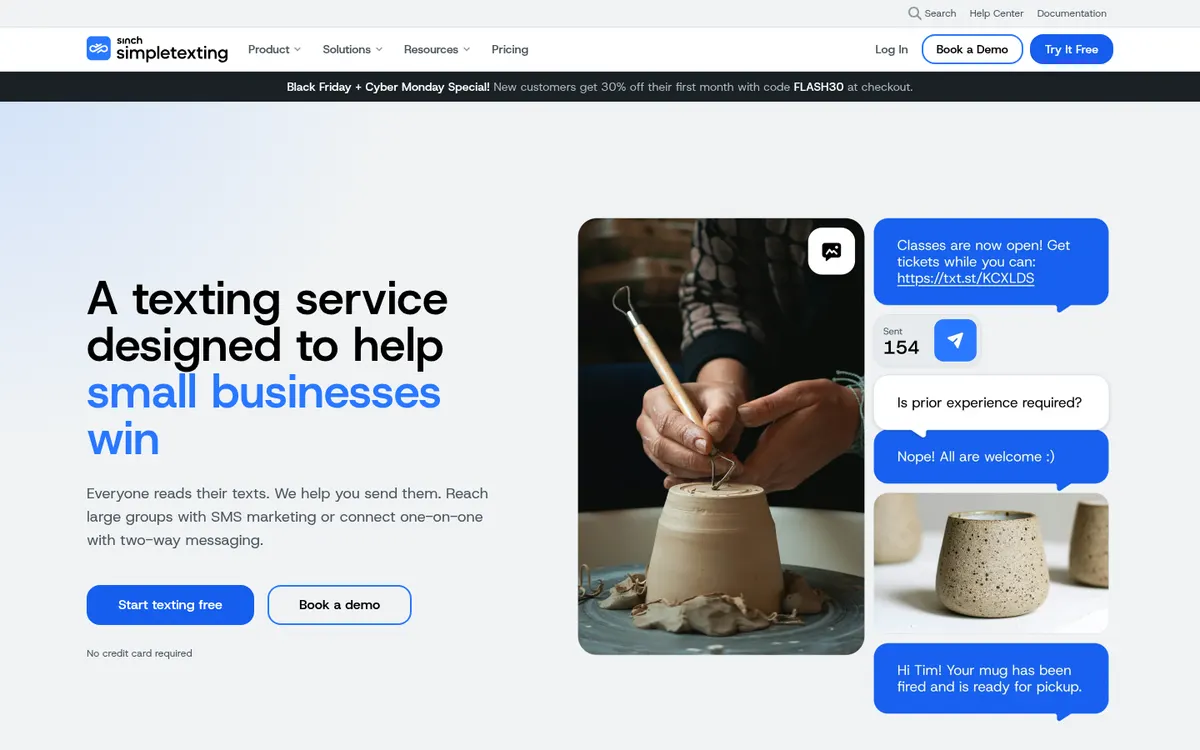
Our verdict
A dependable everyday sender with credit rollover and live support seven days a week, built for small teams.
SimpleTexting is the safest first purchase for a small business that wants to send a lot of plain text messages without learning a new platform. Campaigns are built in a browser dashboard, two-way replies are included, and every plan carries the same feature set: drip automations, MMS picture messaging, an AI message generator and API access. That flat structure matters, because a buyer who starts small does not lose tools when volume grows.
Pricing is set by monthly message volume. The entry point is $39 per month on annual billing for 500 credits, plus a $4 one-time carrier registration fee. Unused credits roll over to the next month, which softens the usual penalty for overbuying, and incoming messages are free. Extra numbers cost $10 per month and extra users cost $20 per month, so a three-person team should add those to the headline number before comparing.
Two cost traps deserve attention. MMS consumes three credits per message, so a media-heavy campaign burns through an allowance three times faster than plain text. US carrier fees near $0.0025 per message are billed on top of the plan. Neither is unusual in this category, but both change the arithmetic for anyone sending photos or running large blasts.
Support is the differentiator. Live human help runs seven days a week by phone, text, chat and email, and there is no long-term contract, so plans can be changed as volume shifts. Media-heavy campaigns should model credit consumption before committing to a tier, because the rollover buffer will not cover a three-credit multiplier for long.
What works
- Unused credits roll over each month
- Live human support seven days a week
- Every feature included on every plan
What to weigh
- MMS uses three credits per message
- Extra numbers cost $10 and extra users $20 monthly
- US carrier fees billed on top
Pick it if
You send mostly plain text at steady volume and want a phone number for human help on weekends.
Skip it if
Your campaigns are image-heavy, since MMS triples credit consumption and erodes the rollover buffer.
Plate 02 of 09
Textedly
Best for buyers who want every feature on every tier
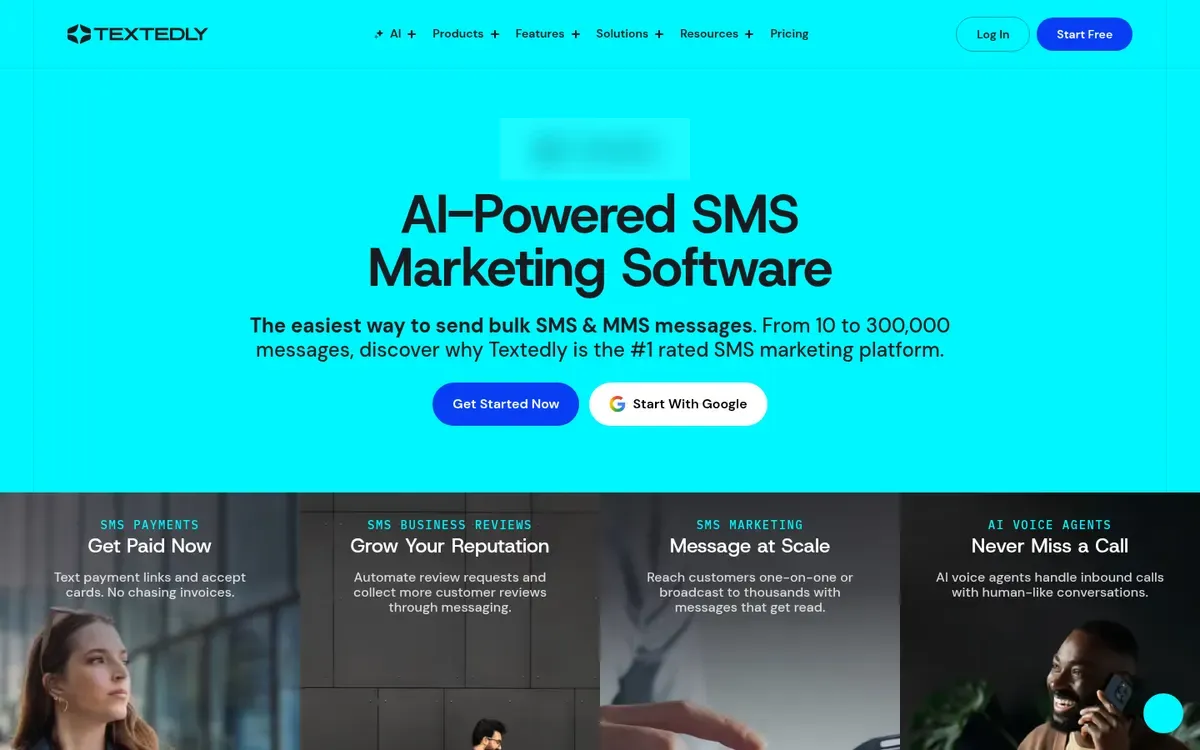
Our verdict
Volume-only pricing with every tool on every tier, though flat fees make the entry plan dearer than it looks.
Textedly competes on packaging rather than on price per message. Text-to-pay links, review request campaigns, MMS, AI agents, integrations with thousands of apps and unlimited contacts all appear on the $29 Basic plan, which covers 500 messages a month. Nothing is held back for a higher tier, so a small sender gets the same toolkit as a large one.
Volume is the only variable. Plans run from $29 for 500 messages up to $5,520 for 300,000 messages, and every account includes a free toll-free number and a free 10DLC number. Annual billing adds 20 percent more messages rather than discounting the rate, which suits teams that can forecast a year ahead. Inbound messages are free, so a two-way support line does not eat the allowance.
The catch is fixed fees. Every account pays an $8 monthly telecom fee, so the entry plan is $37 per month before you send anything beyond the allowance. Overage is billed at $30 per 500 messages, a higher blended rate than the entry plan, which makes underbuying expensive. Additional teammates cost $10 per month each, so a four-person team adds $40 to the bill.
The free account gives 50 messages and one keyword with no credit card. That is a fair look at the editor and delivery, but not at automation, which is where the AI agents and review requests live. Ask for a walkthrough of the AI agents and review request tools before committing.
It fits buyers who dislike feature gating and can absorb a flat monthly fee. It fits less well for very small senders, where $8 is a large share of a $29 plan.
What works
- All tools included at every price point
- Annual billing adds 20 percent more messages
- Inbound messages are free
What to weigh
- $8 monthly telecom fee on every account
- Overage billed at $30 per 500 messages
- Extra teammates cost $10 each per month
Pick it if
You want text-to-pay, review requests and AI agents without paying for a higher tier to unlock them.
Skip it if
You send only a few hundred messages a month, where the flat $8 fee is a big share of the bill.
Plate 03 of 09
EZ Texting
Best for businesses that need to launch texting quickly
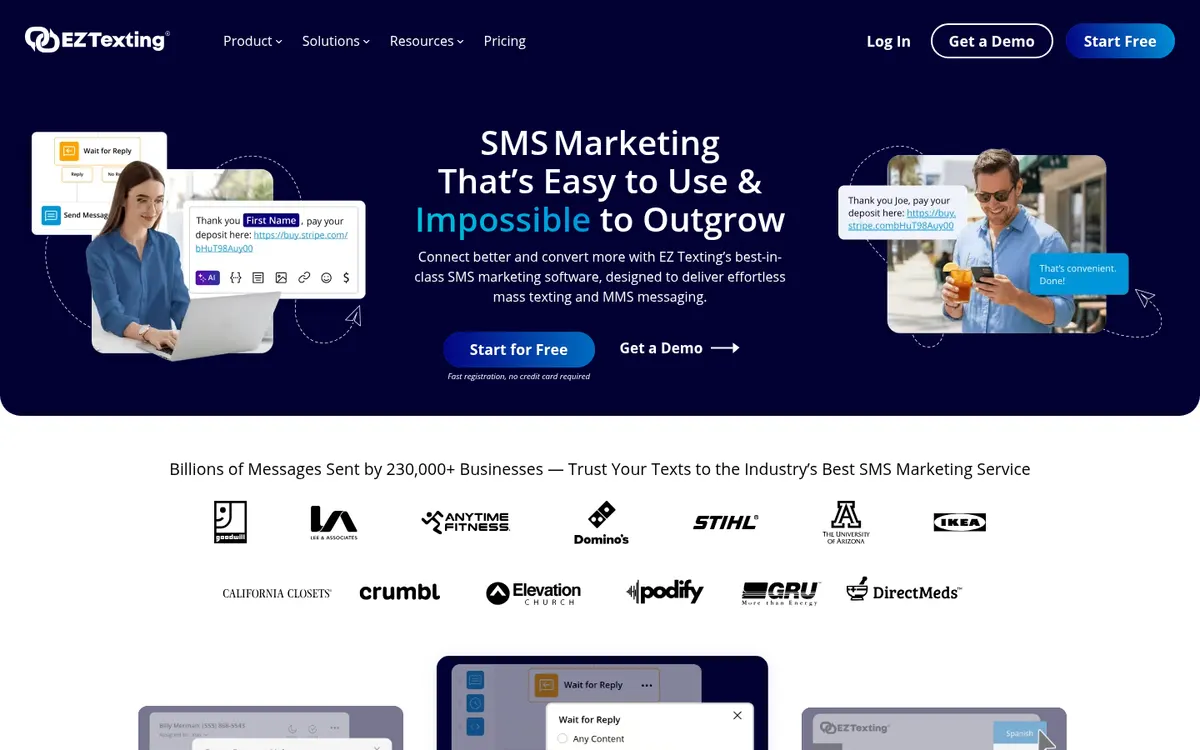
Our verdict
The quickest route to a registered, live campaign, with 10DLC bundled and setup inside one business day.
EZ Texting is the fastest path from a spreadsheet to a live campaign. A2P 10DLC carrier registration is included at no extra charge, and setup can be done within one business day, which matters because registration is usually the slow part of launching a texting program.
The Launch plan is $25 per month, or $20 per month when billed annually, and covers 500 contacts with one user seat. It carries a $5 monthly telecom fee that is waived on higher tiers. For that money you get AI compose and auto-reply tools, drip campaigns, keyword auto-replies, text-to-pay links and a Shutterstock media library, with unlimited contacts across the plan structure.
Two limits show up quickly. Each plan includes a single user seat, so a team of three pays $20 per month extra at $10 per seat. MMS consumes three credits per message, so a picture campaign runs through the allowance three times faster than plain text. Neither is unusual in this category, but both belong in the budget before you choose a tier.
The 14-day free trial is long enough to test drip campaigns and check delivery on a real handset. Inbound messages are free, which keeps two-way conversations cheap and makes a support line viable on the entry plan.
This is a launch tool rather than a power tool. Buyers who want calling or broad integrations will find more in Salesmsg or Sakari. Buyers who want a campaign live this week, with registration handled and a clean editor, will not beat it on speed.
What works
- A2P 10DLC registration bundled at no charge
- Setup possible within one business day
- Inbound messages are free
What to weigh
- Launch plan carries a $5 monthly telecom fee
- Single seat per plan; extras cost $10 monthly
- MMS consumes three credits per message
Pick it if
Registration paperwork is your blocker and you need a compliant campaign running within a day or two.
Skip it if
Your team needs several seats on a cheap plan, since each extra user is billed separately.
Plate 04 of 09
SlickText
Best for brands wanting full features with no tier restrictions
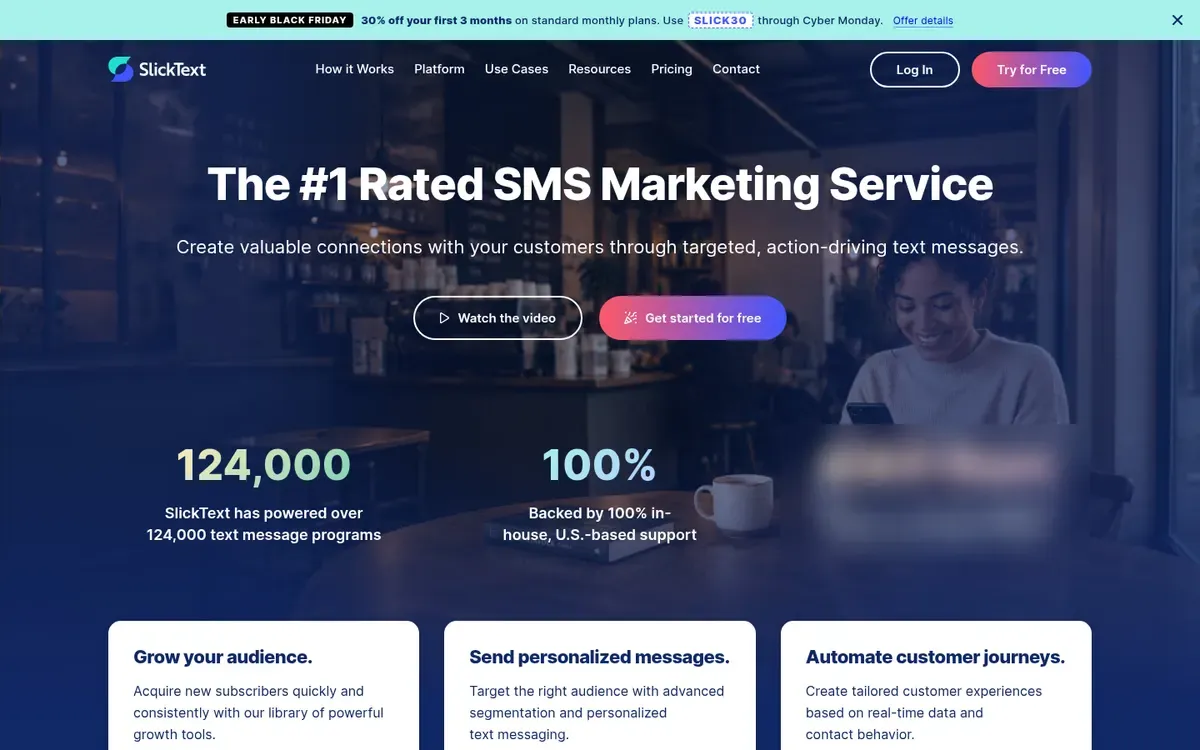
Our verdict
A complete toolkit at every tier with standout rollover terms, but onboarding help starts at the $129 plan.
SlickText sits close to SimpleTexting in shape and price, and it says so: the vendor will match SimpleTexting standard plan pricing. The entry plan is $29 per month for 500 credits, and the ladder runs up to $939 for 50,000 credits. Annual billing gives two months free.
The pitch is completeness. Workflow automation, the integrations library, text-to-pay and review tools, and four number types are available on any paid plan, with no features reserved for enterprise tiers. Credit rollover is generous by category standards: unused credits survive one month on monthly billing and a full year on annual billing, which turns an overbought plan into a buffer rather than a loss.
The interesting option is RCS, one of the four number types available. It is not free: RCS requires $500 setup plus $200 annual maintenance on top of the plan. For a brand that sends frequently to a young list, that may pay for itself; for everyone else it is a line item to defer until the channel is proven.
Support is where the ladder bites. One-on-one onboarding only starts at the $129 plan, so buyers on the entry tier rely on documentation and standard support during the period when they most need guidance. Carrier fees are also passed through on top of the plan price rather than absorbed, and dedicated success managers only appear at the 50,000 credit level.
Smaller senders get a complete product with thin hand-holding. That trade is fine for a confident operator and frustrating for a first-time buyer.
What works
- Full feature set on any paid plan
- Credit rollover up to a full year on annual billing
- Will match SimpleTexting standard plan pricing
What to weigh
- One-on-one onboarding starts only at the $129 plan
- Carrier fees passed through on top of plan price
- RCS needs $500 setup plus $200 annual maintenance
Pick it if
You want the whole toolkit on a cheap plan and plan to buy annual for the long rollover window.
Skip it if
You need guided onboarding, which only appears once you reach the $129 tier.
Plate 05 of 09
Sakari
Best for teams texting across borders or needing deep integrations
Our verdict
Built for cross-border teams, with unlimited seats and a free number, though every inbound reply is billed.
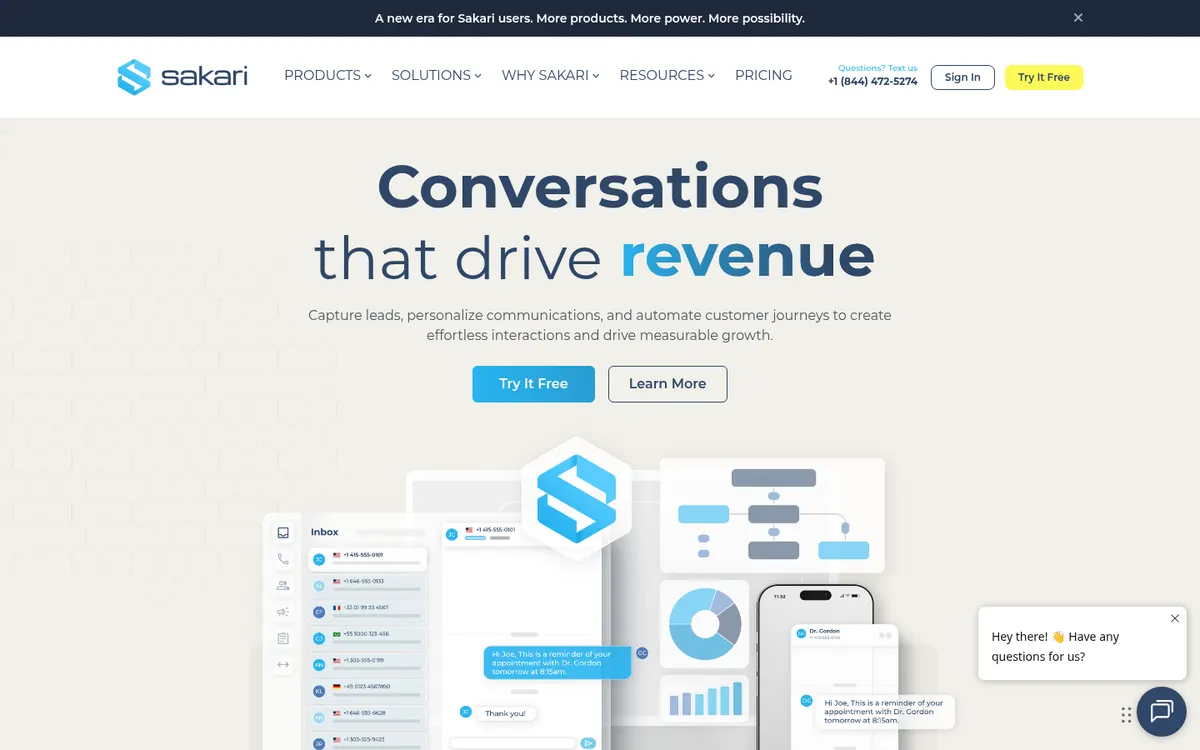
Sakari is the choice for a team that texts beyond the United States. Messaging reaches more than 20 countries with per-country segment rates, and every plan includes a free dedicated number in the US, Canada, the UK or France. Seats and contacts are unlimited on all plans, which removes the per-user arithmetic that inflates bills at SimpleTexting, EZ Texting and Textedly.
The entry point is the Standard plan at $25 per month for 823 segments. That odd number reflects segment-based billing rather than flat messages, so long texts split and cost more. MMS is available in the US and Canada with a $0.02 per segment premium. The integrations library runs past 1,000 apps, unusual outside ecommerce specialists and useful if a helpdesk or CRM needs to trigger sends.
Two things to model before committing. Inbound messages are charged, so a two-way support number costs money on every reply received. Credit rollover lasts 90 days, better than monthly-only plans and shorter than SlickText annual terms. The pricing page lists only the entry point, so mid and high volume rates need a quote from sales.
The 14-day trial includes 100 messaging credits, enough to test international delivery and reply costs on a small list. Chatty support traffic should be tested there specifically, because that is exactly where the inbound charge appears on the first invoice.
It fits sales and support teams working across borders, and companies that want to add seats without renegotiating. It fits less well for a domestic-only business that mostly receives texts rather than sending them.
What works
- Broad international coverage with per-country rates
- Unlimited seats and contacts on all plans
- More than 1,000 app integrations
What to weigh
- Inbound messages are charged
- Pricing page lists only the entry point
- MMS carries a $0.02 per segment premium
Pick it if
Your team texts across borders and you want to add seats without paying per user.
Skip it if
Most of your traffic is inbound replies, since every received message is billed.
Plate 06 of 09
Salesmsg
Best for sales teams needing two-way texting plus calling
Our verdict
Texting and calling in one inbox for sales teams, but a shared credit pool can drain fast.
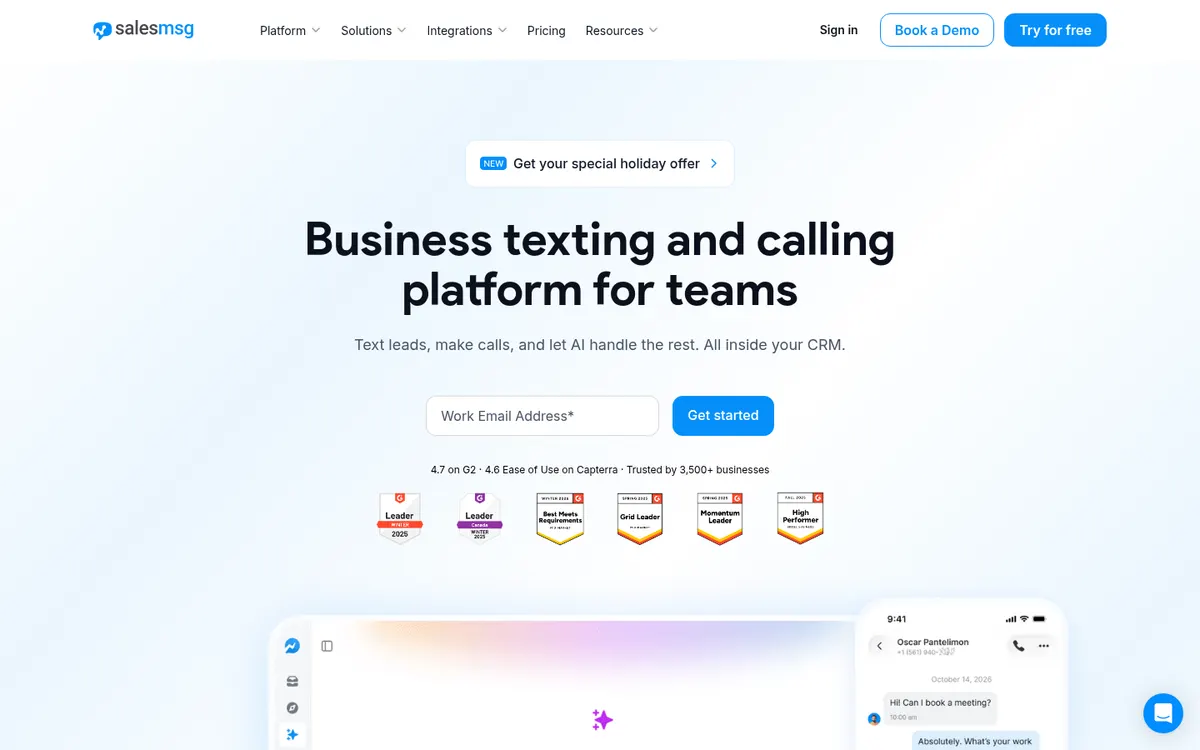
Salesmsg treats texting as a sales activity rather than a marketing broadcast. Two-way texting, voice calling and a power dialer sit in the same interface with a shared team inbox, so a rep can text a lead, call them, and log the outcome without switching tools. HubSpot and Salesforce sync keeps those records on the CRM contact timeline.
The feature list is aimed at conversion: AI agents for lead qualification, a free phone number and unlimited contacts. For an inside sales team already paying for a dialer and a texting app separately, consolidating is the whole argument.
The billing structure is the risk. Texts, calls and AI transcription draw on one credit pool, so a heavy calling week can exhaust the allowance before a single campaign goes out. Subscription credits do not roll over, so unused capacity is lost at the end of the term. Overage rates do improve on higher tiers, which softens the blow for growing teams but not for spiky ones.
Pricing is published on the vendor site rather than summarized here. Our check on November 25, 2026 could not verify a starting figure, so confirm current tiers and credit rates with sales before budgeting, and ask specifically how many credits a call minute consumes.
The 14-day trial is enough to run a real sequence. Load a list, make calls and send texts on the same day, then read the credit consumption report before deciding.
It fits sales teams that live on the phone. It fits poorly for marketing teams that only send campaigns, where the calling features are dead weight on the invoice.
What works
- Calling and texting handled in one tool
- Automatic logging to CRM contact records
- Overage rates improve on higher tiers
What to weigh
- One credit pool shared by texts, calls and transcription
- Subscription credits do not roll over
- Heavy calling can exhaust credits before campaigns run
Pick it if
Reps work leads by phone and text in the same shift and you want one shared inbox for both.
Skip it if
You only send broadcast campaigns, since the dialer features carry cost you will not use.
Plate 07 of 09
Postscript
Best for shopify stores treating SMS as a core channel
Our verdict
The clearest pricing in the category, applied to Shopify only, with a $49 minimum whether you send or not.
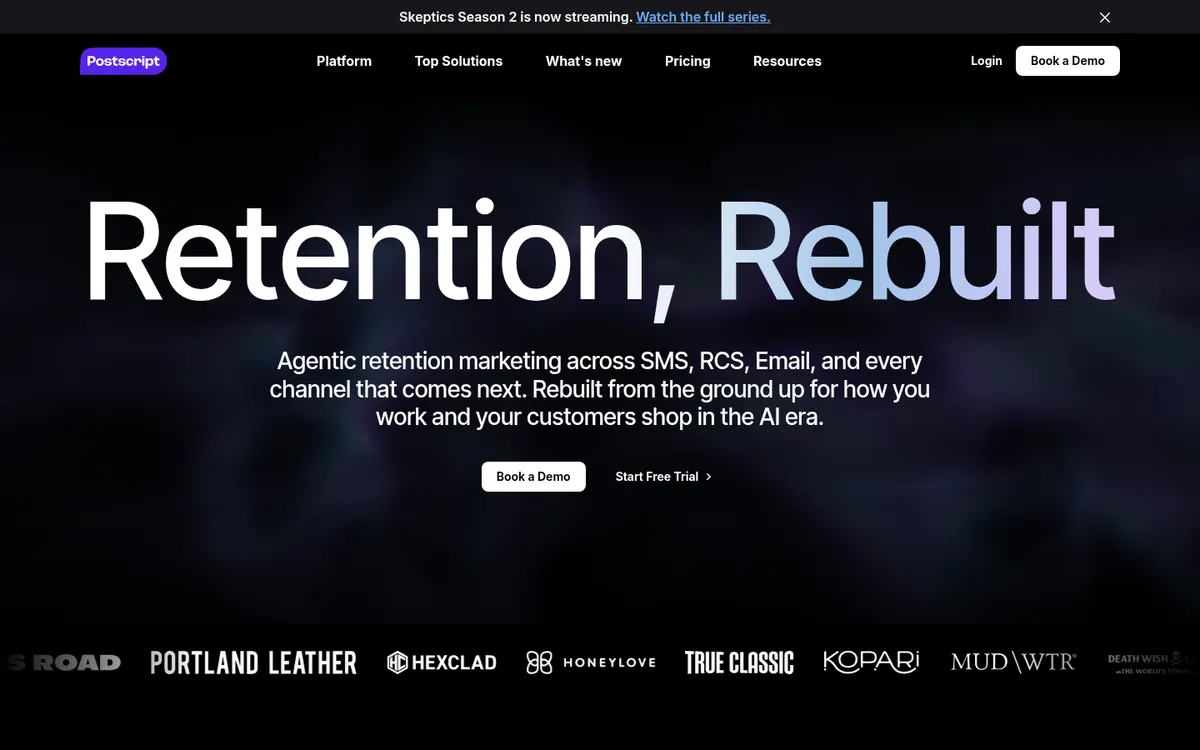
Postscript is built for one platform and does that job properly. Everything runs through Shopify: abandoned cart automations, browse abandonment flows, post-purchase campaigns and keyword opt-in tools all read from the same store data. A merchant does not export a list or stitch together a connector.
Pricing is refreshingly legible for this category. The Starter tier is $0 per month with a $49 monthly minimum spend, so a quiet month still costs $49 but the software is free to install. Growth is $100 per month at roughly $0.008 per SMS, and carrier fees average about $0.004 per message and pass through at cost. Per-message SMS rates are published openly, which is rare here and makes modelling straightforward.
The limits are structural rather than annoying. It works only with Shopify, so a WooCommerce or BigCommerce store cannot use it. Coverage is limited to the US and Canada, so cross-border campaigns need another tool. The $49 monthly minimum applies whether or not you send, which makes it a poor fit for a store testing SMS for the first time in a quiet quarter.
The trial gives $100 of credit for the first 30 days, which at published rates is a real volume of messages rather than a demo. Use it to run an actual abandoned cart flow against live store traffic and check the carrier fee line on the first invoice.
It fits Shopify merchants who intend to make SMS a core channel and can clear the monthly minimum. It fits badly for multi-platform retailers or anyone selling outside North America.
What works
- Automations built specifically for Shopify
- Per-message SMS rates published openly
- Carrier fees passed through at cost
What to weigh
- $49 monthly minimum applies whether or not you send
- Works only with Shopify
- Limited to US and Canada coverage
Pick it if
You run on Shopify, sell in North America and want to see real per-message rates before signing.
Skip it if
Your store runs on another platform or you sell outside the US and Canada.
Plate 08 of 09
Klaviyo
Best for stores wanting email and SMS in one platform
Our verdict
The sensible choice if email already lives here, since SMS rides the same profiles and flows.
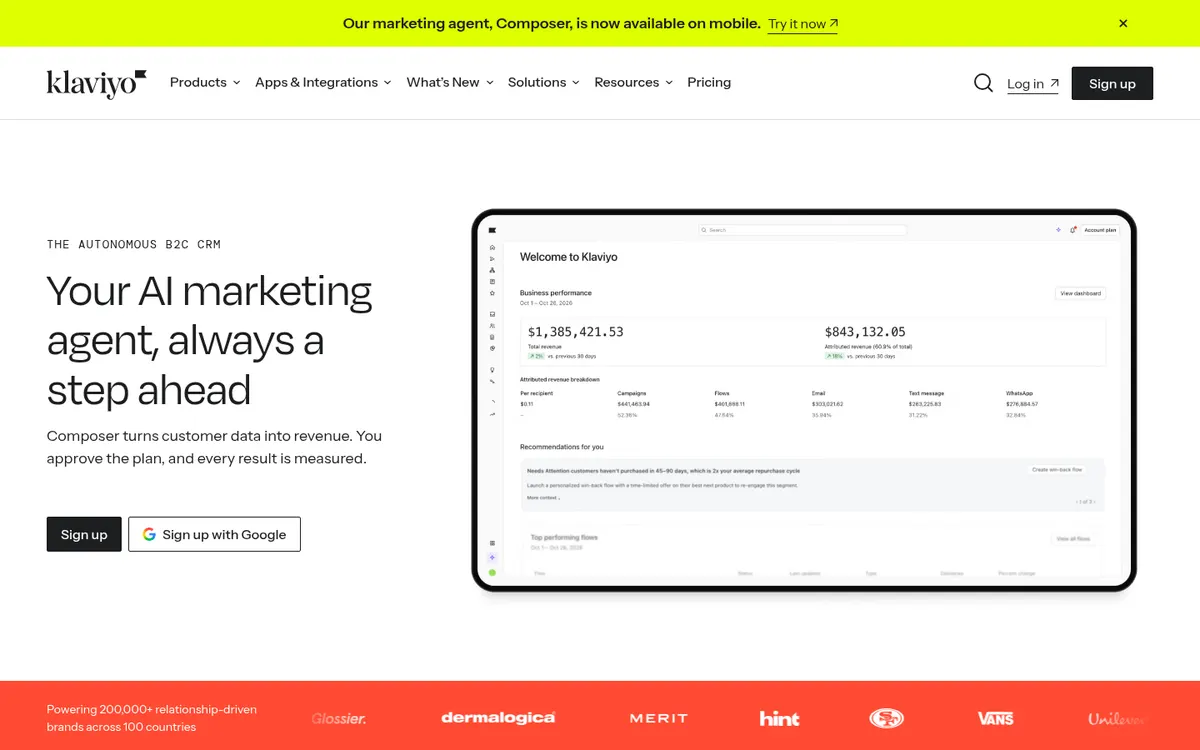
Klaviyo is the answer for a store that already runs email there and wants SMS without a second platform. Contacts live in one database, segments apply across both channels, and the flow builder handles email and SMS steps in the same automation. No list migration, no duplicate profiles, no reconciling two dashboards at month end.
The email side starts at $20 per month for 500 active profiles and 5,000 emails, and there is a genuine free tier covering 250 active profiles and 500 emails per month. SMS is layered on top as a credit model at around $0.009 per credit. A store that texts hard in a promotional month can roughly double its total bill, which is worth planning for rather than discovering.
Profile-based pricing is the structural trade-off. You pay for stored contacts whether or not you message them, so a large dormant list is a recurring cost. Segmentation, AI subject line generation and revenue attribution are strong, and attribution across both channels in one report is a key reason to keep both channels on one platform.
There is no free trial, which makes Klaviyo the hardest tool on this list to test before buying. The free tier is the substitute: run it on 250 profiles and 500 emails, then add SMS credits. Existing customers have a shorter path, since lists and flows are already built; a new store should expect to rebuild welcome and abandoned cart flows from scratch.
It fits existing Klaviyo customers and multi-channel stores. As a standalone SMS tool for a business that does not send email, the platform cost is hard to justify.
What works
- No separate platform or list migration for SMS
- Free tier covers 250 profiles and 500 emails monthly
- One automation builder for both channels
What to weigh
- SMS credits around $0.009 each on top of email
- Profile pricing charges for stored contacts
- No free trial
Pick it if
You already send email on Klaviyo and want SMS steps inside the same flows and reports.
Skip it if
You need texting only, since the email platform cost sits on the bill regardless.
Plate 09 of 09
Attentive
Best for enterprise brands wanting a managed SMS program
Our verdict
A managed program for very large lists, sold on annual terms with no published pricing or trial.
Attentive sells a managed program, not a login. Campaign strategy, creative and deliverability support sit alongside the software, and the compliance work that large lists demand is handled by the vendor team rather than by a marketer with a spreadsheet. For a brand with tens of thousands of subscribers, that division of labor is the product.
The software covers SMS and email, list growth tools and enterprise-scale sending infrastructure, with dedicated account support attached. Deliverability and compliance support matter more than they sound: carrier filtering punishes unregistered or poorly consented traffic, and a managed service is designed to keep a large list out of that hole.
Pricing is the obstacle. Attentive publishes no rates, so budgeting requires a sales process before you can compare it on cost. Annual commitments are standard, and pricing is quote based. There is no free plan and no trial, which means no way to evaluate the interface before signing.
The comparison to make is against a self-serve tool plus an agency. If your team can run campaigns, EZ Texting or SlickText at their published plan prices leaves budget for creative help. If nobody internally owns the channel, the managed model earns its fee. Smaller brands also lose the negotiating leverage that makes an annual commitment worthwhile, so the effective cost per message is hardest to justify at exactly the volume where the service would help most.
It fits enterprise brands that want strategy attached to software. It fits badly for small businesses that can self-serve and want to see a price list first.
What works
- Service model extends to strategy and creative
- Compliance and deliverability built for large lists
- Suited to brands with very large subscriber bases
What to weigh
- No published pricing; budgeting needs a sales process
- Annual commitments with quote based pricing
- Not cost-effective for small self-serve businesses
Pick it if
You have tens of thousands of subscribers and nobody in-house to own compliance and campaign strategy.
Skip it if
You need to see pricing and test the interface before committing to an annual term.
What Does SMS Campaign Software Actually Do?
SMS campaign software is the layer between your contact list and a mobile phone. It stores numbers, manages consent, schedules sends, handles replies in a shared inbox and reports on delivery and clicks. The carriers do the delivery, but they will not deal with an individual business directly at volume, so platforms hold the registered sender identity (a 10DLC brand and campaign, a toll-free number or a short code) and pass traffic through a gateway on your behalf.
The category splits into three shapes. Purpose-built senders such as SimpleTexting, Textedly, EZ Texting and SlickText sell message credits and treat texting as the whole product. Commerce platforms such as Postscript and Klaviyo attach SMS to a store or a customer database, so the value sits in flows like abandoned cart recovery. Sales engagement tools such as Salesmsg and enterprise services such as Attentive bundle people and process around the channel.
What most buyers actually need from the software:
- A way to collect opt-ins that satisfies carrier rules
- Bulk sending with scheduled or triggered campaigns
- Two-way replies handled by a team, not one phone
- Automations for welcome, reminder and follow-up sequences
- Reporting on delivery, opt-outs and revenue where relevant
The distinction that matters at purchase is between features and throughput. Several platforms in this list offer drip campaigns, MMS and integrations. What separates them is how they charge for volume, whether replies cost money, and how much registration work they absorb. A tool that includes A2P 10DLC registration removes a week of paperwork. A tool that charges for inbound messages changes the economics of a support line.
Ignore the claim that texting is just another channel. A missed opt-out or an unregistered sender ID gets traffic filtered by carriers, and no dashboard feature fixes that. Treat compliance handling and registration as core product decisions, then compare automation and reporting on what remains.
This guide sits in the Marketing collection. Buyers weighing nearby tools often read the guides to AI tools for email marketing and free email blast software next.
How SMS Campaign Software Pricing Works, From Credits to Carrier Fees
Most SMS platforms do not really sell software. They sell message volume, and the subscription is a wrapper around a credit balance. That is why two tools with near-identical feature lists can cost wildly different amounts at 50,000 messages a month.
| Model | How it bills | Typical fit | Example from this list |
|---|---|---|---|
| Credit packs | A monthly allowance of credits, sometimes with rollover | Senders with steady, predictable volume | SimpleTexting, $39 for 500 credits on annual billing |
| Volume tiers | Price steps up with monthly message count, features stay constant | Teams that want all tools at every tier | Textedly, $29 for 500 messages per month |
| Platform plus SMS credits | An email or CRM subscription with SMS billed per credit on top | Stores already running email on the same platform | Klaviyo, $20 email plan plus SMS credits around $0.009 each |
| Per-message rate with a minimum | Published per-SMS rate plus a monthly minimum spend | Shopify stores where SMS follows store revenue | Postscript Starter at $0 with a $49 monthly minimum |
| Quote-based contract | Annual commitment priced on list size and volume | Enterprise brands wanting a managed program | Attentive, quote only |
Three costs sit outside the headline number. Carrier fees are passed through by some vendors: SimpleTexting bills about $0.0025 per US message and Postscript averages about $0.004, and both appear on the invoice after the plan. Flat telecom fees are the second: Textedly charges $8 monthly on every account, EZ Texting charges $5 on its Launch plan only. Seats and numbers are the third: extra users run $10 to $20 per month at SimpleTexting, EZ Texting and Textedly.
Registration is the line item that varies most. EZ Texting bundles A2P 10DLC registration at no extra charge, SimpleTexting charges a $4 one-time carrier registration, and SlickText charges $500 setup plus $200 annual maintenance for RCS.
Add the plan, the carrier pass-through, the flat fees and the extra seats, then divide by messages actually sent. That blended number is the only comparison that survives contact with an invoice.
Every price in this guide was read on the vendor's own pricing page on November 25, 2026. Where a vendor does not publish a figure we could confirm, the card says "See website" rather than a guess. For the arithmetic around this purchase, try the free Email campaign metrics calculator.
How to Choose SMS Campaign Software in Six Steps
- Set your monthly message count. Estimate campaigns plus replies for a normal month, then double it for a launch month. Every pricing model in this list keys off volume, and undercounting is the most common reason a first bill surprises.
- List the channels you need. Plain SMS covers most campaigns. Add MMS only if images earn their place, since it costs three credits at several vendors. Add calling if reps work leads by phone.
- Check what registration costs. Ask whether A2P 10DLC registration is bundled, billed once or charged annually. EZ Texting includes it, SimpleTexting charges a $4 one-time fee, and delays here push your launch date.
- Price the team, not just the plan. Add extra seats at $10 to $20 per month and extra numbers at $10 per month. Sakari includes unlimited users; Textedly and EZ Texting charge per teammate.
- Take the trial with real traffic. Use the 14-day windows at EZ Texting, Sakari and Salesmsg to send to real handsets, then read credit consumption before buying annual.
- Compare blended cost per message. Divide the full monthly invoice, including carrier fees and telecom charges, by messages sent. That number, not the plan price, is what you are actually buying.
Five SMS Software Buying Mistakes to Avoid
- Comparing sticker prices only. A $29 plan with an $8 telecom fee is a $37 plan. Add seats, numbers, carrier fees and overage rates before you decide that one tool is cheaper than another.
- Ignoring carrier and telecom fees. SimpleTexting bills about $0.0025 per US message on top, Postscript averages $0.004, and Textedly adds $8 monthly. These lines decide the real monthly cost.
- Underestimating MMS credit use. At SimpleTexting, EZ Texting and elsewhere, a picture message consumes three credits. A media campaign planned on a plain-text budget runs out of allowance within days.
- Buying a store-locked platform. Postscript works only with Shopify and only in the US and Canada. Klaviyo is hard to justify if you do not send email. Match the tool to your actual stack.
- Leaving registration to launch week. Carrier registration gates your first send. Bundled registration at EZ Texting or a $4 one-time fee at SimpleTexting is fine; discovering the requirement after you announce a campaign is not.
Best SMS Campaign Software 2026: questions
Which SMS platforms suit small businesses on a tight budget?
EZ Texting starts at $20 per month on annual billing, Sakari at $25 and Textedly at $29. SimpleTexting at $39 on annual billing adds credit rollover and seven-day support. Watch the add-ons: the EZ Texting Launch plan carries a $5 monthly telecom fee and Textedly charges $8 on every account.
What does starter pricing include, and what is the real all-in cost per message?
A starter plan usually buys 500 messages or credits plus one user seat, with the features included. The real cost adds carrier fees of roughly $0.0025 to $0.004 per message, any flat telecom fee, and extra seats at $10 to $20 per month. Divide the total invoice by messages sent to get a comparable per-message figure.
When should you use a 10DLC number instead of a dedicated short code?
Use 10DLC for everyday marketing and support. It is fast to register, cheap to run and works from a standard ten-digit number. A dedicated short code suits very high volume brands that need throughput and brand recognition, and it takes longer to provision. Most small and mid-sized senders never need one.
Can you text from a landline or a personal mobile number?
Not for marketing at volume. Campaign platforms provision a dedicated number, and several include one free: Sakari includes a free number in the US, Canada, the UK or France, Textedly includes free toll-free and 10DLC numbers, and Salesmsg includes a free phone number. Texting from a personal handset breaks consent records and team visibility.
What does 10DLC registration involve and what does it cost?
10DLC registration pairs a brand (your business) with a campaign (the type of messages you send), and US carriers require it before traffic is accepted. Costs vary by vendor: EZ Texting bundles it at no extra charge, SimpleTexting charges a $4 one-time carrier registration, and Textedly includes a free 10DLC number. Expect identity checks before approval.
What consent and opt-out rules apply to marketing texts in the US?
You need prior express written consent for marketing texts, a clear description of what subscribers will receive, and working opt-out handling on every message. Honor STOP requests immediately, keep records of when and how consent was collected, and respect quiet hours. Platforms handle keyword opt-outs, but the consent record and the message content stay your responsibility.