
Contents of this guide
The shortlist
Our top 3 for software buyers

Ahrefs
Backlink data depth
- Best for
- Teams already paying for Ahrefs link and research data
- Features
- 4 noted: Backlink index, Keyword research, Site audit, 750 keywords on Lite

Semrush
Daily suite data
- Best for
- Content teams wanting research, audits and tracking in one place
- Features
- 5 noted: Daily tracking, Suite bundle, Multi-location, PPC data, Site audits
AccuRanker
On-demand refresh speed
- Best for
- Agencies needing fresh data and on-demand refreshes
- Features
- 4 noted: On-demand refresh, Large lists, Looker Studio, AI prompt tiers
Disclosure for this guide. All 9 tools here are unpaid editorial picks. The position of a paid listing can be part of what the vendor pays for. Paid and unpaid tools are scored on the same rubric and keep their cons. Details are in the advertising disclosure.
The ledger
Index of every tool
| Tool | Free plan | Trial | Rubric | Compare | ||
|---|---|---|---|---|---|---|
| 01 | AhrefsTeams already paying for Ahrefs link and research data | $29Starter, per monthChecked Nov 25, 2026 | Yes, Ahrefs Free with limited Site Explorer and Site Audit access | No | ||
| 02 | SemrushContent teams wanting research, audits and tracking in one place | $117.33SEO, per month, billed annually, 500 keywords tracked daily, 5 websitesChecked Nov 25, 2026 | Yes, free account with 1 demo project and 10 reports per day | 7-day free trial | ||
| 03 | AccuRankerAgencies needing fresh data and on-demand refreshes | €229Professional, per month, from 2,000 keywordsChecked Nov 25, 2026 | No | 14-day free trial, no credit card | ||
| 04 |  SE RankingFreelancers and small agencies wanting a full suite cheaply | $103.20Core, per month, billed annually, 10 projects, 2k keywords tracked dailyChecked Nov 25, 2026 | No | 14-day free trial, no credit card required | ||
| 05 |  NightwatchTeams needing daily local data plus AI search visibility | €79Starter, per month, 500 keywords, 50 AI prompts, unlimited seatsChecked Nov 25, 2026 | No | 14-day free trial, no credit card required | ||
| 06 |  ProRankTrackerAgencies needing precise local data and polished client reports | See websiteNot published | No | No | ||
| 07 |  MangoolsSolopreneurs wanting a simple, cheap SEO toolkit | See websiteNot published | Yes, limited daily usage across the suite | No, 48-hour money-back window | ||
| 08 |  WincherSmall teams wanting focused daily tracking without suite bloat | $49Basic, per month, 500 keywords, 10 websites, 1 userChecked Nov 25, 2026 | No | 14-day free trial | ||
| 09 |  Advanced Web RankingAgencies tracking thousands of keywords with unlimited seats | $139Pro, per month, 7,000 keywords, unlimited users and projectsChecked Nov 25, 2026 | No | Free trial plus 30-day money-back guarantee |
Prices are the lowest paid plan the vendor shows, read on November 25, 2026. Sort by price ranks published monthly figures; tools without one go last. Pin up to three tools to compare them side by side.
How this guide was put together
Every tool here was scored on the same five criteria, weighted for the questions operators actually ask when they buy: keyword coverage (25 percent), data freshness (25 percent), total cost (20 percent), reporting depth (15 percent) and fit and extras (15 percent).
Keyword coverage asks how many keywords, projects and sites the entry plan includes before overages or upsells start. Data freshness separates daily from weekly refreshes and credits on-demand pulls, because cadence decides what the tool can be used for. Total cost is the real monthly bill after seats, tier jumps and billing terms. Reporting depth covers white-label reports, client portals and exports. Fit and extras covers bundled audits, research, backlinks and AI visibility, plus the setup time each tool demands.
Prices come from vendor pricing pages checked on 25 November 2026, not from resellers or older marketing pages. Where a page did not load, the entry says so and points you to the vendor site instead of quoting a number we could not confirm. Where a vendor bills in euros, we kept the euro figure rather than converting it, because the dollar amount charged moves with exchange rates.
Scores inform the write-up but they do not set the order. The order reflects editorial fit: which tool suits the buyer each entry describes, given the list size, refresh needs and reporting demands in that scenario. A tool can score well and still sit lower because it fits fewer readers.
If an entry carries the Featured label, that position is a paid placement. It is scored with the same rubric as every other entry, appears with the same cons, and gets no relief in the weaknesses. Scores are ours and are not supplied by vendors.
The full process, including how we handle corrections, is on the methodology page. Paid listings follow the advertising disclosure.
Rubric and weights
Every tool below is scored from 1 to 10 on these five criteria. The scores describe each tool; the order is an editorial call on fit for the buyer each card describes, plus the disclosed Featured position.
- 25%Keyword coverageHow many keywords, projects and sites the entry plan covers before overages or upsells start.
- 25%Data freshnessWhether updates are daily, weekly or on demand, since refresh cadence decides what a tracker can be used for.
- 20%Total costThe real monthly bill after seats, keyword tiers and billing terms, using the vendor's own pricing page.
- 15%Reporting depthWhite-label reports, client portals and export options for agencies that hand data to clients.
- 15%Fit and extrasWhether audits, research, backlinks or AI visibility come bundled, and how much setup the tool demands.
Plate 01 of 09
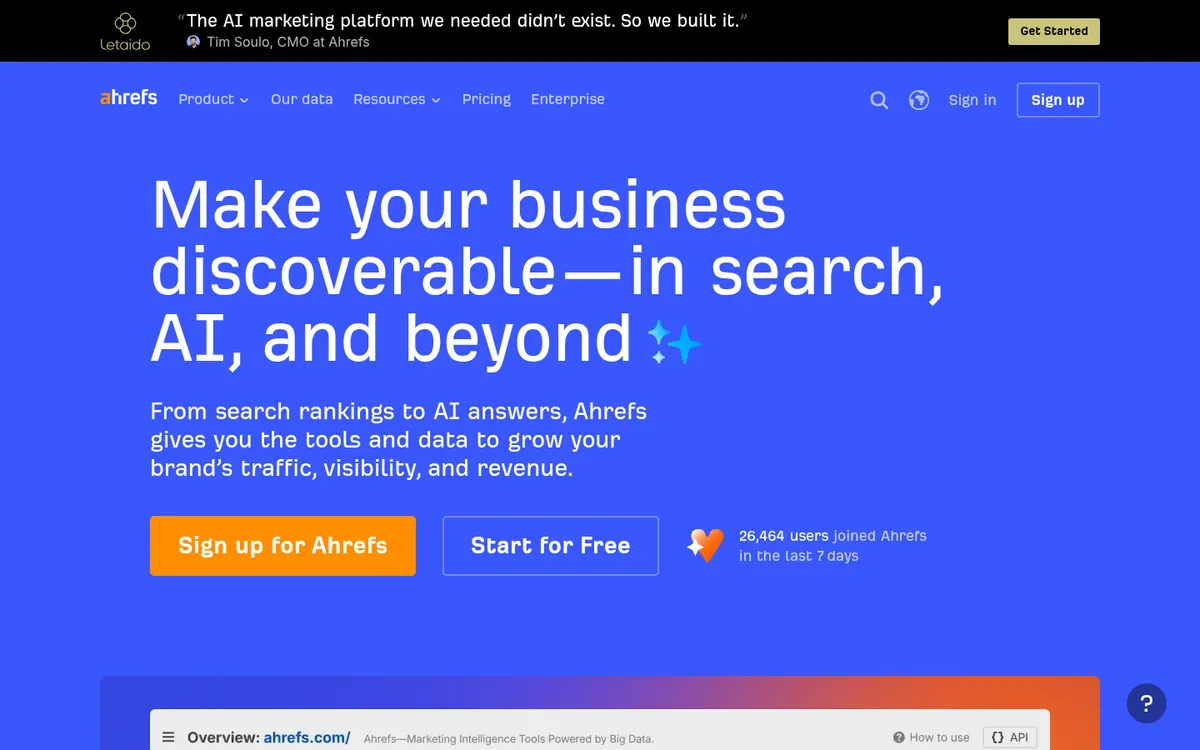
Ahrefs
Best for teams already paying for Ahrefs link and research data
Our verdict
A strong rank tracker as a bonus on data you already buy, weaker when positions are the whole job.
Ahrefs treats rank tracking as one panel inside a much larger SEO toolkit. The tracker draws on the same index as the backlink and keyword research tools, so a keyword found in the research database is a few clicks from the positions report, and a drop in rankings can be checked against new or lost links without leaving the account. Site Audit sits in the same workspace, which is why teams already paying for the suite rarely buy a separate tracker.
Entry pricing is low, but the keyword allowance at entry is small. Starter is $29 per month for 50 keywords and Lite is $129 per month for 750, with six months of ranking history on Lite. Plans from Standard upward drop the credit system, which removes the metered lookups that catch heavy users on entry tiers. Weekly refresh is the default below those tiers.
Two limits decide whether Ahrefs fits. Refresh is weekly by default on the lower tiers, so fast-moving campaign pages look stale next to a dedicated tracker that pulls daily. Extra seats add $40 to $60 per month depending on tier, so a five-person team pays well above the headline, and there is no white-label reporting, which rules the tool out for agencies handing branded reports to clients.
Pick Ahrefs when the rank tracker is a bonus on top of data you already buy: backlinks, keyword research and audits in one subscription. Buyers who only need positions, or who need daily refreshes and client-branded reports, will pay less and get more from a precision tracker such as AccuRanker or Wincher. The Starter tier is a sensible test if you already use Ahrefs and want to see whether tracking belongs in the same workspace.
What works
- Very deep backlink data alongside ranking data
- Lite tier covers 750 keywords
- Useful bonus for teams already on the suite
What to weigh
- Rank tracking is a side feature rather than the core product
- Weekly rather than daily updates on lower tiers
- Extra seats add $40 to $60 per month, and there is no white-label reporting
Pick it if
You already pay for Ahrefs links, research or audits and want positions in the same account.
Skip it if
You need daily refreshes or branded client reports and nothing else from the suite.
Plate 02 of 09
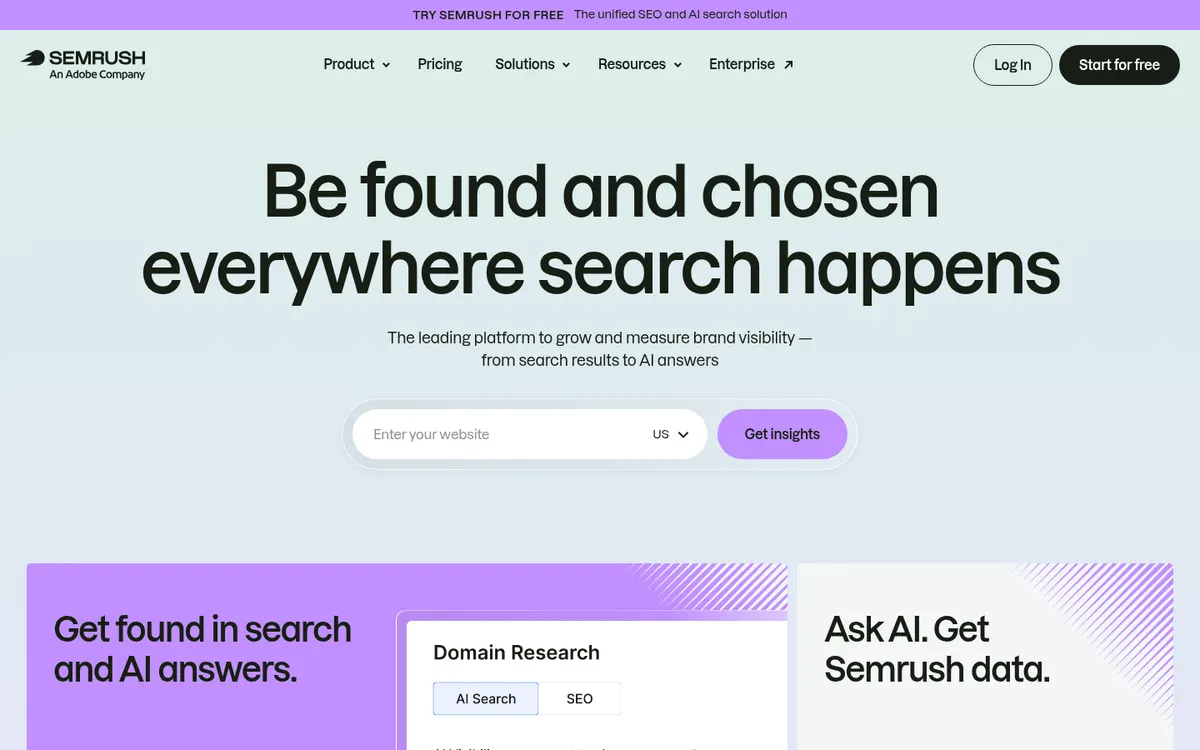
Semrush
Best for content teams wanting research, audits and tracking in one place
Our verdict
Daily tracking inside a very broad suite, priced for teams that will use the rest of it.
Semrush runs Position Tracking inside a suite that also covers keyword research, backlink analysis, site audits, and paid search and social data. The SEO plan quoted here is $117.33 per month on annual billing, with 500 keywords tracked daily across five websites. Because research, audits and tracking share one dataset, a content team can move from a keyword gap to a draft brief to a positions chart without stitching tools together.
Daily updates are the default, which is the main reason teams pay the premium. Multi-location tracking and historical ranking data sit on Guru and above, so a local business with several branches has to budget past the entry tier. Pro also omits the content toolkit and the historical data, a split that catches buyers who assume the entry plan covers everything the brand advertises. Guru is $249.95 per month and Business is $499.95.
Costs stack quickly. Additional seats run $45 to $100 each, so a five-person team can double the bill on seats alone. API access requires the Business tier, which rules it out for teams that want to pipe positions into a warehouse or a dashboard. The free account is a single demo project with 10 reports per day, enough to look around and not enough to report on.
Plan names were restructured in 2026, so confirm which tier ladder a checkout shows before you commit. The 7-day trial is short for a suite this broad, so go in with one project and one question. Pick Semrush when rank tracking is one job among several and a single invoice beats three subscriptions. If positions are the only thing you need, a dedicated tracker costs less and refreshes on demand.
What works
- Daily position tracking inside a very broad suite
- One dataset shared across research, audits and paid search
- Multi-location tracking on higher tiers
What to weigh
- Costly if rank tracking is the only need
- Pro tier omits the content toolkit and historical data
- Additional seats run $45 to $100 each
Pick it if
Your team will use the research, audits and paid search data as well as positions.
Skip it if
You track positions only, or you need API access without jumping to the Business tier.
Plate 03 of 09
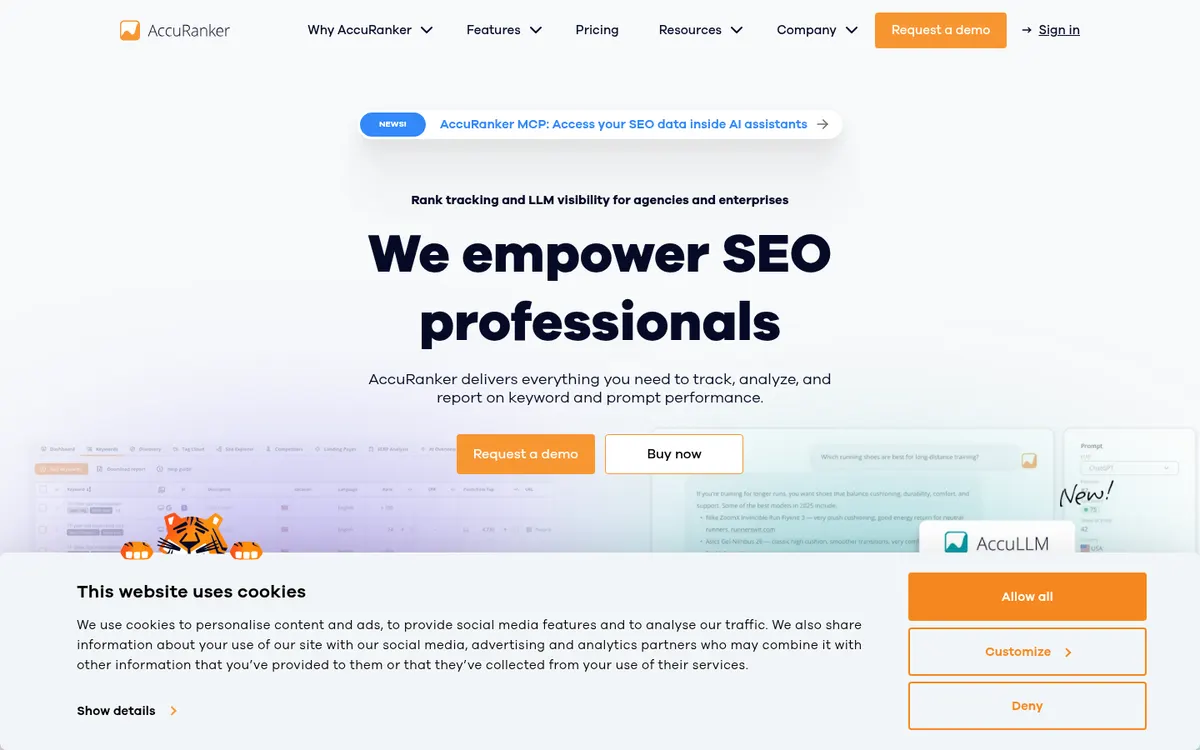
AccuRanker
Best for agencies needing fresh data and on-demand refreshes
Our verdict
The fastest refreshes and cleanest large-list handling here, at a price only agencies can justify.
AccuRanker does one job and does it faster than the rest of this list. Daily updates run as standard, and on-demand refreshes pull a keyword's current position on request, which matters when a campaign launches and the team wants to see movement within the hour rather than the next morning. The Professional plan starts at €229 per month from 2,000 keywords, so the entry point is built for agencies and in-house teams with large lists.
Volume handling is the second selling point. Lists in the tens of thousands are supported, Looker Studio integration pushes positions into client dashboards, and API access on the higher tiers feeds internal reporting. Annual billing saves 10 percent. AI search and LLM prompt tracking sit in separate tiers from $229 per month, which is one way to cover AI visibility without adding a second subscription. Expert is $764 per month.
The trade-off is scope. AccuRanker tracks rankings and little else, so audits, backlink data and keyword research come from another vendor. There is no plan below 2,000 keywords and no free tier, which prices out small sites and single-page businesses entirely. A 14-day free trial without a credit card is the way to test whether the refresh speed justifies the spend.
Budget roughly 11 cents per keyword per month at the entry tier, which is reasonable at agency scale and expensive for a 200 keyword site. Pick it when fresh data and on-demand pulls decide your reporting cycle and the keyword list is measured in thousands. Skip it if you need a full SEO suite, or if your list is short enough that Wincher or Mangools covers it.
What works
- Fastest on-demand data in the category
- Handles large keyword lists cleanly
- Annual billing saves 10 percent
What to weigh
- Rankings only, so audits and links need another tool
- No plan below 2,000 keywords
- Entry pricing rules out small sites
Pick it if
You run large keyword lists and someone acts on position changes the same day.
Skip it if
You maintain a few hundred keywords or need audits and link data in the same bill.
Plate 04 of 09
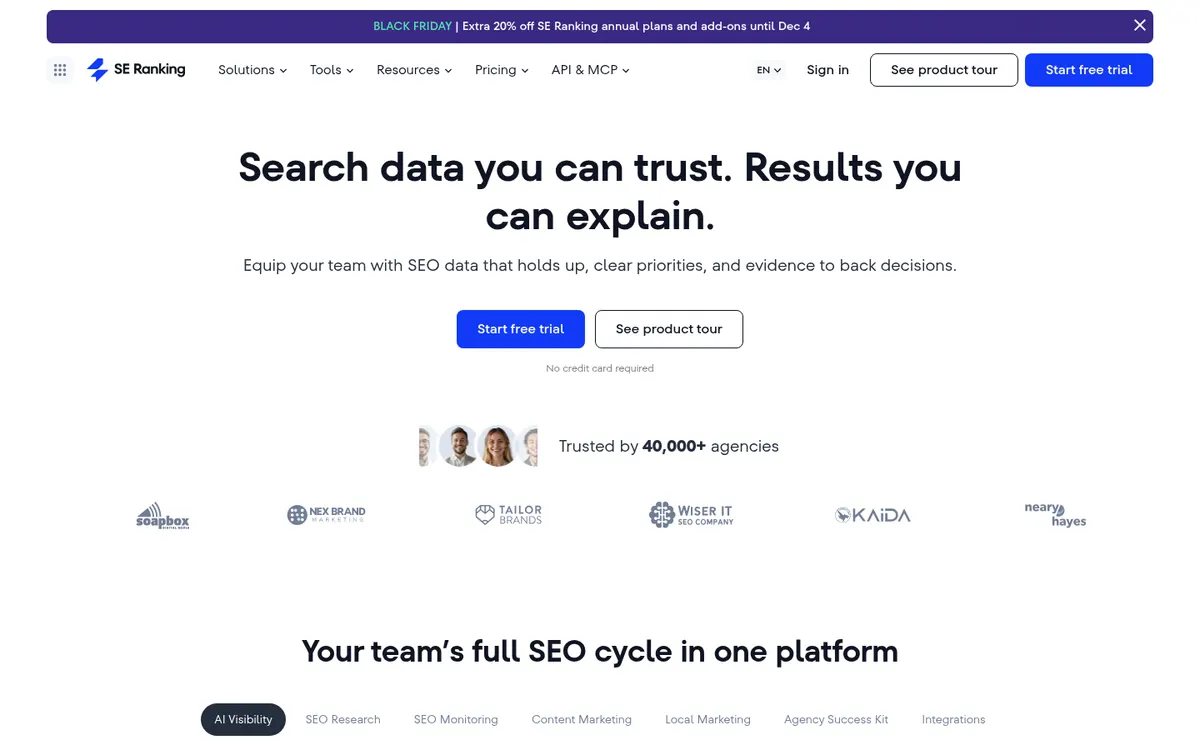
SE Ranking
Best for freelancers and small agencies wanting a full suite cheaply
Our verdict
A full working suite with white-label reports at a mid-market price, with research depth as the trade-off.
SE Ranking bundles daily rank tracking with site audits, keyword research, backlink monitoring and local SEO tooling, and it includes white-label reporting rather than charging for it as an add-on. The entry plan is now Core at $103.20 per month on annual billing, with 10 projects and 2,000 keywords tracked daily. That is a full working stack for a freelancer or a small agency on one invoice.
The local coverage is the feature that surprises buyers. Zip-code level tracking lets a multi-branch business see positions for a specific service area rather than a city average. Local variants and device splits consume the keyword allowance quickly, so size the tier against the real list, including competitor keywords, rather than the headline number.
Plan names and prices have moved. Essential appears at $52 per month on annual billing, Pro at $95.20 for 2,000 keywords and Business at $207.20 for 5,000, while the entry tier is quoted as Core at $103.20 with 10 projects and 2,000 keywords tracked daily. Confirm which ladder the checkout shows, because the arithmetic changes which tier is cheapest for your keyword count.
Research and backlink depth trail the largest suites, so a team that leans on link data will still want a second subscription. Everything else holds together: daily refreshes, branding on client reports, local tracking below city level and a 14-day trial with no credit card. Pick it when you want a complete suite at a mid-market price without seat charges stacking up. Skip it if link index depth or enterprise keyword volumes are the deciding factor.
What works
- Rank tracking plus audits, research and backlinks on one invoice
- Zip-code level local tracking
- White-label reports included
What to weigh
- Research and backlink depth trail the largest suites
- Keyword allowances drain quickly with competitor and local variants
- Plan names and entry prices changed in 2026, so the checkout needs checking
Pick it if
You are a freelancer or small agency that wants tracking, audits and branded reports from one vendor.
Skip it if
You need the deepest backlink index or keyword lists in the high tens of thousands.
Plate 05 of 09
Nightwatch
Best for teams needing daily local data plus AI search visibility
Our verdict
Classic rankings and AI visibility in one dashboard with unlimited seats and unusually granular local data.
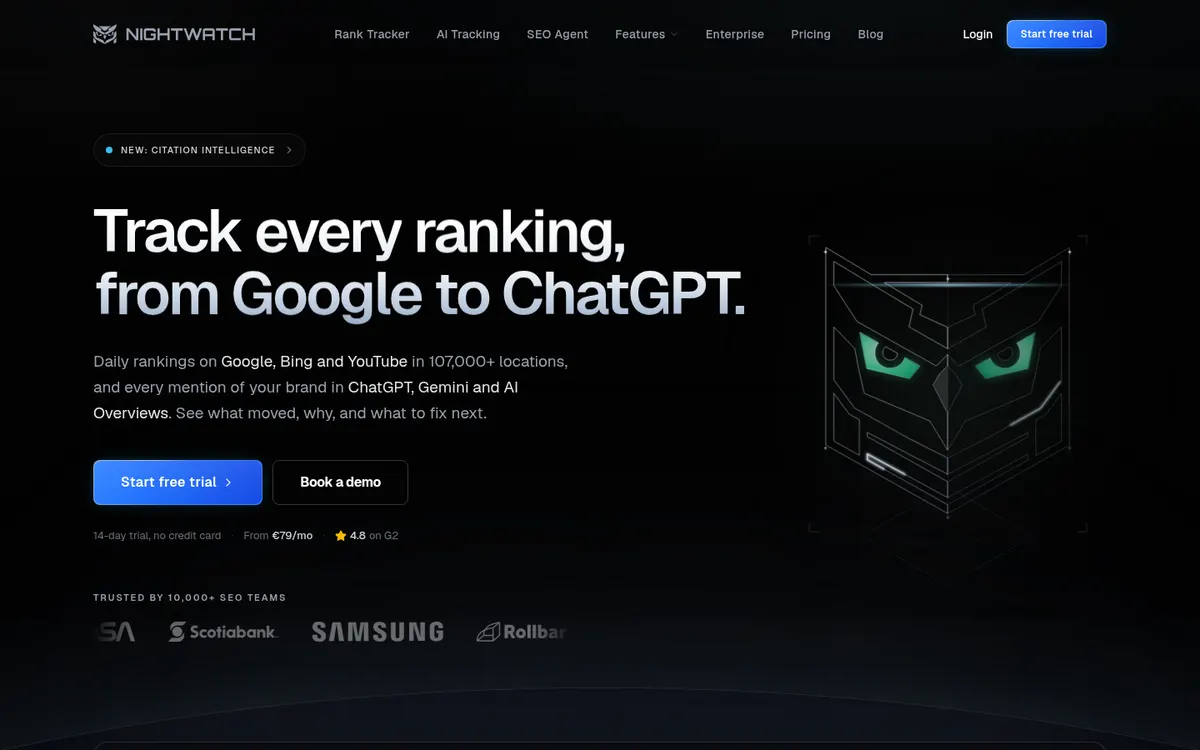
Nightwatch tracks daily positions across Google, Bing, YouTube, DuckDuckGo and the Map Pack, and it adds AI visibility tracking for ChatGPT, Claude and AI Overviews in the same dashboard. Starter is €79 per month for 500 keywords and 50 AI prompts, with unlimited seats, so the whole team can log in without a per-user charge. That combination is rare at this price.
The AI side is the differentiator. Most trackers on this list either sell AI prompt monitoring as a separate tier or leave it out, so a team already paying for an LLM monitoring tool can often fold that spend into Nightwatch. Local coverage is unusually granular, reaching ZIP level across more than 107,000 locations, which suits multi-location businesses and agencies running local campaigns.
Two practical warnings. Published prices conflict between the vendor's own blog and recent readings of the pricing page, so budget from the checkout total rather than a marketing page. Billing is in euros, so the dollar amount charged moves with exchange rates, which complicates fixed-fee client contracts. Setup takes a day or two to configure projects, competitors and locations properly.
White-label reporting comes with paid plans, and GA4, Search Console and Looker Studio integrations cover the usual reporting stack. There is no free tier, but the 14-day trial needs no credit card. Pick Nightwatch when classic rankings and AI search visibility need to live in one place and seats should not cost extra. Skip it if you need dollar-denominated invoicing, a same-day start, or you only care about Google desktop positions.
What works
- Classic and AI search visibility in a single dashboard
- Very granular local coverage
- Can replace a separate LLM monitoring subscription
What to weigh
- Published prices conflict across sources, so the checkout total needs confirming
- Euro billing means USD charges move with exchange rates
- Setup takes a day or two
Pick it if
You want ranked positions and AI answer visibility together without paying per seat.
Skip it if
You need a one-hour setup, dollar invoicing, or a free plan to test on.
Plate 06 of 09
ProRankTracker
Best for agencies needing precise local data and polished client reports
Our verdict
The best client reporting in this list, paid for with per-keyword costs that run two to three times rivals.
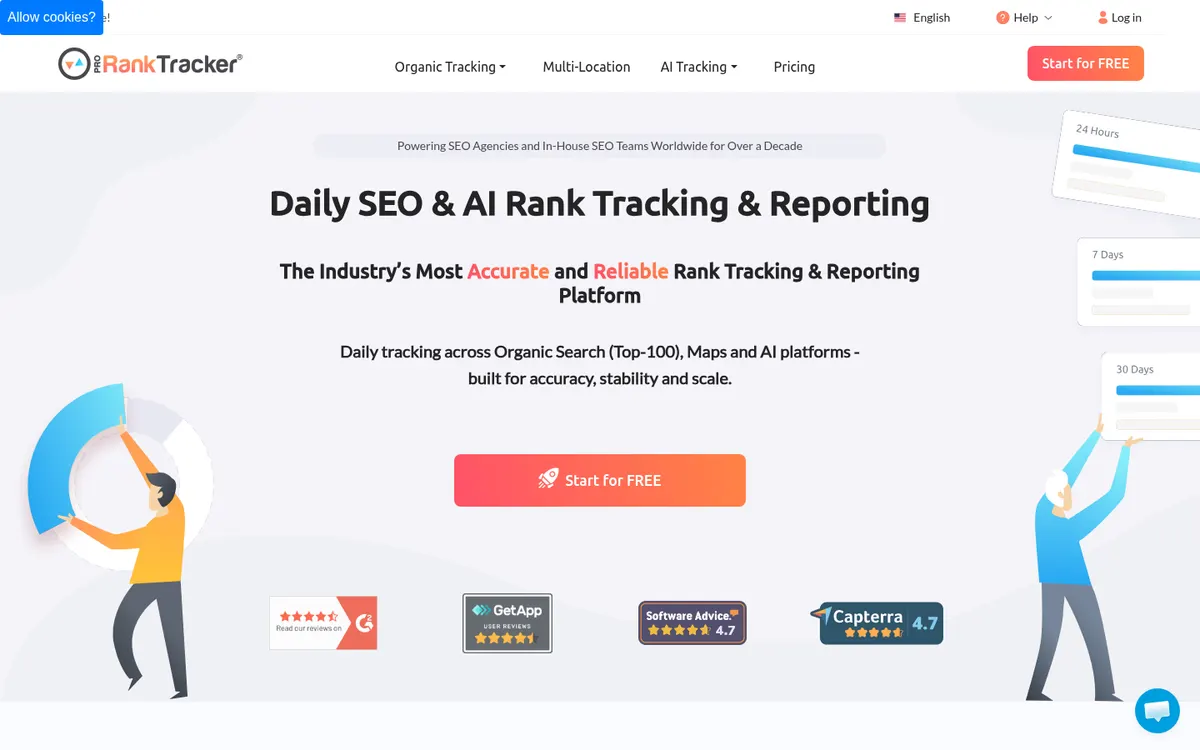
ProRankTracker is built around client reporting. White-label reports are the most mature in this list, the MyRanks client portal gives each account a branded login, and Looker Studio integration feeds live dashboards. Local and mobile splits are granular, and YouTube and Map Pack tracking cover the surfaces agencies get asked about most.
Cost is the sticking point. Per-keyword pricing runs two to three times some competitors, and the term accounting needs modelling before you buy: one term is counted per organic keyword and two per AI prompt, so an AI tracking list shrinks the classic allowance faster than the headline suggests. On-demand updates run on credits rather than included refreshes.
Pricing is on the vendor site and the page did not load on 25 November 2026, so the numbers here are unconfirmed. Treat the checkout total as the only figure worth budgeting against, and confirm it on the pricing sheet before you buy.
There is no keyword research or backlink data, so this is a reporting and tracking purchase, not a suite. There is also no free tier and no trial, which makes the first invoice the test. Pick ProRankTracker when clients see the reports and polish matters more than keyword volume per dollar. Skip it if you need cheap scale, research data or a way to trial before paying.
What works
- Most mature client-facing reporting in the category
- Granular local and mobile splits
- On-demand updates via credits
What to weigh
- Per-keyword cost runs 2 to 3 times some competitors
- Term accounting counts two terms per AI prompt
- No keyword research or backlink data
Pick it if
Clients read the reports and a branded portal is part of what you sell.
Skip it if
You need cheap keyword volume, research data, or a trial before committing.
Plate 07 of 09
Mangools
Best for solopreneurs wanting a simple, cheap SEO toolkit
Our verdict
Cheap, quick and beginner-friendly, but the daily caps and slot accounting keep it to small lists.
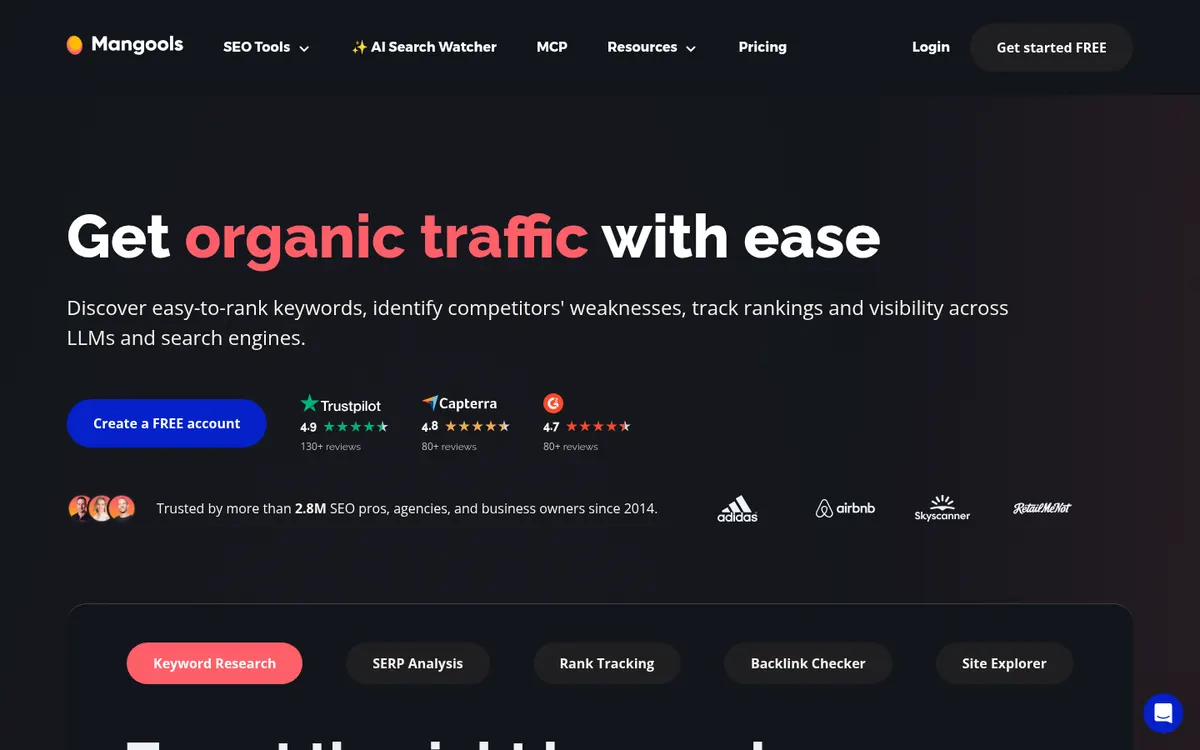
Mangools packages five tools into one subscription: KWFinder for keyword research, SERPChecker for SERP analysis, SERPWatcher for rank tracking, LinkMiner for links and SiteProfiler for site analysis. Every tool is included on every plan, which is unusual at this price and useful for a solo operator who needs a bit of everything rather than depth in one area.
Setup is quick and data appears within minutes of signup. The interface is plain and beginner-friendly, with none of the configuration that dedicated trackers demand. Daily lookup caps keep the cost down: Basic allows 100 lookups per day, which is fine for a small site and tight for an agency running competitor research. A free tier with limited daily usage across the suite covers a look around.
The tracking limits matter more than the caps. Desktop and mobile tracking consume separate keyword slots, so a 200 keyword allowance on Basic covers fewer real keywords than the number suggests. Annual billing saves 35 to 40 percent, and the money-back window is only 48 hours, so decide quickly rather than drifting past it.
Pricing is on the vendor site and the page did not load on 25 November 2026. Pricing is only confirmed at the vendor's checkout, so budget from what the site quotes on the day you buy. Pick Mangools when you want a cheap, simple toolkit and do not need daily depth or white-label reporting. Skip it if you track more than a few hundred keywords or report to clients under your own brand.
What works
- Fast setup, live data within minutes of signup
- Simple interface suited to beginners
- Lowest credible entry price in the pack
What to weigh
- Daily lookup caps, 100 per day on Basic
- Desktop and mobile tracking use separate keyword slots
- Short money-back window and no confirmed price on 25 November 2026
Pick it if
You are a solo operator who wants research, tracking and links in one cheap subscription.
Skip it if
You need daily depth on hundreds of keywords or reports under a client's brand.
Plate 08 of 09
Wincher
Best for small teams wanting focused daily tracking without suite bloat
Our verdict
Clean daily tracking with almost no setup, though most teams end up on Standard at $89.
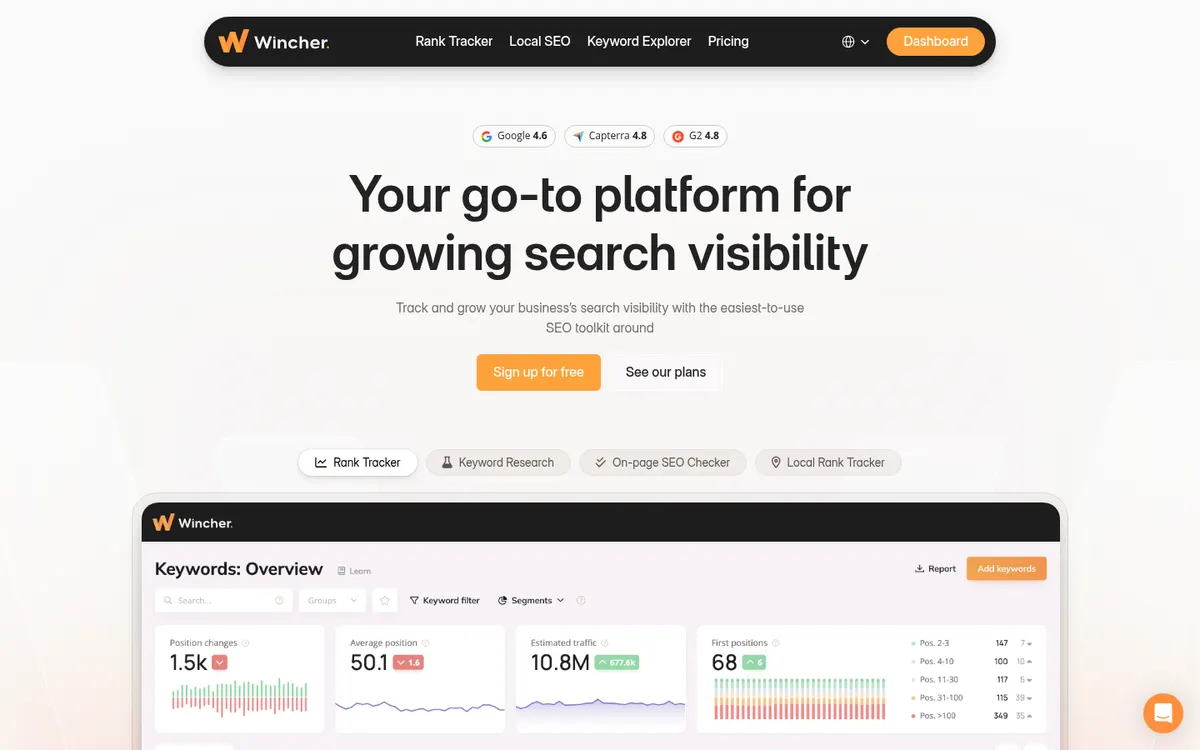
Wincher does daily rank tracking without the rest of the suite. Basic is $49 per month for 500 keywords across 10 websites and one user, which suits a small team that wants positions in a clean dashboard and nothing else to configure. Setup takes under an hour and the interface has almost no learning curve.
Share-of-voice analysis and keyword gap analysis come with the plans rather than as paid extras, which is more than the price suggests. WordPress and Yoast integration pulls positions into the CMS, and on-demand updates, API access and white-label reports start at Standard rather than Basic.
The entry tier is single-user and has no on-demand updates, so most teams end up on Standard at $89 per month, which narrows the gap to full suites that also cover audits and research. Professional is $319 per month for 5,000 keywords. Desktop and mobile consume separate keyword slots, so the allowance is smaller in practice than the headline. A 14-day trial covers a real list.
Currency handling is worth checking before you sign: the vendor's materials point to euro billing, so the dollar amount can shift with exchange rates month to month. That is a small annoyance for a single subscription and a real problem if you resell tracking inside fixed-fee client contracts. Pick Wincher when you want focused daily tracking for a small team and do not need audits or link data. Skip it if you need multiple users on the cheapest tier or one vendor for the whole SEO stack.
What works
- Clean, focused daily tracking with little learning curve
- Setup under an hour
- Share-of-voice and gap analysis included
What to weigh
- Basic is single-user with no on-demand updates
- Tier maths pushes most teams to Standard, narrowing the gap to full suites
- Desktop and mobile consume separate keyword slots
Pick it if
You want daily positions and share of voice without paying for a suite you will not use.
Skip it if
Two or three people need access on the entry plan, or you need on-demand refreshes from day one.
Plate 09 of 09
Advanced Web Ranking
Best for agencies tracking thousands of keywords with unlimited seats
Our verdict
Unbeatable keyword volume and unlimited seats, for teams that already have audits and research covered.
Advanced Web Ranking sells keyword volume and seats rather than polish. Pro is $139 per month for 7,000 keywords with unlimited users and projects, and Agency is $279 for 14,500. Because seats do not scale with team size, the maths changes for larger agencies: a ten-person team pays the same as a two-person team on the same tier.
Local and mobile tracking are included on every plan rather than held back for higher tiers, and AI visibility tracking comes with all paid plans. The developer API opens at Agency, and hourly on-demand updates arrive on the higher tiers. Reporting covers the usual client needs, and a 30-day money-back guarantee alongside the free trial takes most of the risk out of a first purchase.
The scope is narrow by design. This is a precision tracker, so site audits, backlink data and keyword research come from another vendor. Below roughly 1,000 keywords the price is hard to justify against a mid-market suite that bundles more, and the interface assumes you know what you are doing rather than walking you through it.
The value calculation is simple: divide the monthly price by the keyword allowance and multiply by team size. On Pro that works out to about two cents per keyword per month before any seat cost, which is the best volume-per-dollar ratio in this list, and the unlimited users make it better as the team grows. Pick it when you track thousands of keywords with a large team and want reporting without per-seat invoices. Skip it if you need a suite, or if your list is short enough that a $49 tracker does the job.
What works
- Best keyword volume per dollar in the pack
- Unlimited seats and projects
- 30-day money-back guarantee
What to weigh
- Precision tracker only, so audits and links need a second tool
- Overkill below 1,000 keywords
- Interface assumes experience
Pick it if
You track thousands of keywords across a large team and already buy research and audit data elsewhere.
Skip it if
Your list is under 1,000 keywords or you want one vendor for the whole workflow.
What Is Keyword Rank Tracking Software and What Does It Record?
Keyword rank tracking software checks where a URL appears in search results for a set of keywords, from a set location and device, and records the position over time. That is the whole job: a scheduled check, a stored history and a report someone reads. Everything else is packaging.
The mechanics matter more than the marketing. A tracker sends a query to a search engine, parses the results page, finds your URL and logs the position. Running that at scale costs money, which is why plans are sold by keyword allowance rather than by seats. Each variant, a desktop check, a mobile check, a different city or a separate AI prompt, is usually billed as another keyword.
Two product shapes dominate. A suite such as Semrush or Ahrefs bundles tracking with keyword research, site audits and backlink data, so one subscription covers the whole workflow. A precision tracker such as AccuRanker, Wincher or Advanced Web Ranking tracks positions, reports on them and stops there, usually at a lower cost per keyword.
What a tracker typically records:
- Position history per keyword, with date stamps and change alerts
- Local and device splits, sometimes down to ZIP or postcode level
- Competitor positions and share of voice across the same list
- SERP features such as Map Packs, and increasingly AI answers and prompt visibility
Refresh cadence is the feature buyers underestimate. Daily data supports campaign decisions, weekly data supports content planning, and on-demand pulls support a client call that starts in an hour. A tracker that refreshes weekly is not a worse product, it is a different product.
Finally, output. Agencies need white-label reports and client portals. In-house teams need exports into Looker Studio, GA4 or a warehouse. Check that before the keyword allowance, because a cheap tracker that cannot produce the report your client expects is not cheap.
This guide sits in the Software collection. Buyers weighing nearby tools often read the guides to commission software and research platforms next.
How Rank Tracker Pricing Works, and Where the Bill Grows
Rank trackers are priced by capacity, not by value. Almost every vendor sells a monthly subscription with a keyword or project allowance, then charges more when you exceed it. Knowing which axis a plan scales on tells you where the bill grows.
Keyword-tiered plans charge for the size of the list. Project-tiered plans charge for the number of sites. Seat add-ons charge per extra user on top of a base plan. Suite bundles fold tracking into a wider subscription. A few vendors bundle unlimited seats into a flat keyword price, which changes the maths for larger teams.
| Model | How it bills | Typical fit | Example from this list |
|---|---|---|---|
| Keyword tiers | Monthly fee for a keyword band | Sites and agencies with a known list size | AccuRanker Professional at €229 per month from 2,000 keywords |
| Project tiers | Monthly fee per project, keyword cap per tier | Teams running several client sites | SE Ranking Core at $103.20 per month, 10 projects, 2,000 keywords daily |
| Seat add-ons | Base plan plus a fee per extra user | Larger in-house teams | Ahrefs adds $40 to $60 per month per extra seat |
| Suite bundle | One subscription covering research, audits and tracking | Teams replacing two or three tools | Semrush SEO at $117.33 per month billed annually |
| Flat volume with unlimited seats | Fixed monthly fee for a keyword band, no seat charge | Agencies with big teams and large lists | Advanced Web Ranking Pro at $139 per month for 7,000 keywords |
| Term credits | Included or prepaid credits for on-demand pulls | Agencies topping up reporting on demand | ProRankTracker on-demand updates via credits |
Three multipliers decide the real number. Device splits, where desktop and mobile are tracked separately, can halve an effective allowance. Local variants, where each postcode or city is a separate check, drain a plan fast. AI prompt tracking is newer and often sold as its own tier, as with AccuRanker's prompt tiers from $229 per month, though Nightwatch includes 50 prompts on its €79 Starter plan.
Billing term is the second lever. Semrush quotes SEO at $117.33 per month on annual billing against $139.95 monthly, SE Ranking quotes Core at $103.20 on annual billing, and Mangools discounts 35 to 40 percent for annual payment. Annual payment locks the tier for a year, so size it for the keyword count you expect in month nine.
Currency is the third. Nightwatch starts at €79 and AccuRanker at €229, both billed in euros, so a dollar budget moves with exchange rates. Keep the euro figure in your model rather than converting once.
Every price in this guide was read on the vendor's own pricing page on November 25, 2026. Where a vendor does not publish a figure we could confirm, the card says "See website" rather than a guess. For the arithmetic around this purchase, try the free Email campaign metrics calculator.
How to Pick a Rank Tracker Without Overbuying
Count the list you will actually maintain. Pull keywords from Search Console and paid search, then add competitor terms. Compare that number with the allowances here: Mangools Basic at 200 keywords, Ahrefs Starter at 50, and AccuRanker starting at 2,000.
Set refresh cadence by page type. Campaign and launch pages justify daily or on-demand pulls. Evergreen content does not. Ahrefs runs weekly by default on lower tiers, Semrush and Nightwatch run daily, and AccuRanker adds on-demand refreshes on top of daily updates.
Add up seats, not just the headline. Extra users cost $40 to $60 per month on Ahrefs and $45 to $100 on Semrush, while Advanced Web Ranking and Nightwatch include unlimited users. A five-person team can move tiers on seats alone.
Decide whether clients see the reports. White-label reporting is included with SE Ranking and Nightwatch, arrives from Wincher's Standard tier, and is absent from Ahrefs. If branded PDFs are part of what you sell, that single line item can rule out a cheaper plan.
Run a trial on one real project. AccuRanker, SE Ranking and Nightwatch offer 14-day trials without a credit card, and Advanced Web Ranking adds a 30-day money-back guarantee. Load an actual keyword list, not a demo, and check a sample of positions against a manual search.
Model year one, not month one. Annual billing cuts the monthly rate on Semrush, SE Ranking and Mangools, but locks the tier. If your keyword count grows 20 percent a quarter, the cheaper tier becomes the expensive mistake by summer.
Five Rank Tracking Mistakes That Waste Budget
Tracking every keyword you can export. A long list inflates the bill and buries the pages that matter. Start with revenue pages and 20 to 50 competitor terms, then expand once someone is acting on the data weekly.
Ignoring how allowances are counted. Device splits, local variants and AI prompts each consume slots. ProRankTracker counts two terms per AI prompt, and Mangools and Wincher charge desktop and mobile separately, so a 500 keyword plan is often a 250 keyword reality.
Buying a suite for positions alone. Semrush and Ahrefs are good value only if you use the audits, research and link data. If positions are the whole job, AccuRanker, Wincher or Advanced Web Ranking cost less for the same tracking work.
Skipping the trial on a real list. Demo data hides import problems, wrong location settings and reporting gaps. Load one client project during the trial, compare a sample of positions with a manual check, and only then commit to an annual term.
Fixing a currency mismatch late. Nightwatch bills from €79 and AccuRanker from €229, both in euros, so a dollar budget moves with exchange rates and fixed-fee client contracts absorb the difference. Check the invoiced currency before you quote a retainer.
Best Keyword Rank Tracking Software 2026: questions
How many keywords does a site actually need to track?
Start with the pages that earn revenue and add competitor terms second. A local business with 20 service pages rarely needs more than 100 to 200 keywords, while an agency running 10 client sites passes 2,000 quickly. Mangools Basic caps at 200 keywords, Wincher Basic at 500, and AccuRanker starts at 2,000, so the tier ladder should follow the list you will genuinely maintain.
How often should rankings refresh for campaigns versus stable content?
Campaign pages need daily or on-demand data, and stable evergreen content is fine on a weekly pull. Ahrefs runs weekly refreshes by default on lower tiers, Semrush tracks daily on its $117.33 SEO plan, and AccuRanker adds on-demand refreshes to daily updates. Paying for daily data only makes sense if someone acts on the movement within a week.
What does AI search visibility tracking cover, and which tools include it?
AI visibility tracking records whether a brand appears in generated answers on tools such as ChatGPT and Claude, and in AI Overviews, usually by running a set of prompts on a schedule. Nightwatch includes 50 AI prompts on its €79 Starter plan, Advanced Web Ranking includes AI visibility on all paid plans, and AccuRanker sells prompt tracking in separate tiers from $229 per month.
Which tools track local results at ZIP or postcode level?
Nightwatch and SE Ranking both go below city level. Nightwatch covers ZIP-level tracking across 107,000-plus locations, and SE Ranking offers zip-code level local tracking on its plans. ProRankTracker also splits local and mobile results. Every local variant consumes keyword allowance, so a grid of postcodes for one service page can eat a small plan quickly.
Are free tiers usable for business rank tracking?
Rarely for client work. Ahrefs Free covers limited Site Explorer and Site Audit access, Semrush offers one demo project with 10 reports per day, and Mangools has limited daily usage across the suite. None of the three replaces a paid tracker for reporting. SE Ranking, AccuRanker, Nightwatch, Wincher and Advanced Web Ranking offer no free plan at all.
What is the cheapest credible paid entry point for tracking?
Ahrefs Starter at $29 per month for 50 keywords is the lowest confirmed paid entry in this list. Mangools has a low entry price on annual billing, though its page did not load on 25 November 2026 so the figure needs confirming on the vendor site. Both cap you hard. If you need daily refreshes on a few hundred keywords, Wincher Basic at $49 or Nightwatch Starter at €79 is the realistic floor.